


The earlier you know, the more you can do – but what you do with that knowledge matters
September is World Alzheimer’s Month, and this year’s theme is “The Earlier You Know, the More You Can Do: A Dementia Diagnosis Matters.”
It does matter. I have seen first hand how a diagnosis can bring understanding to something that may have felt confusing, frightening or impossible to explain. It can open the door to support, conversations, planning and, importantly choice.
But I think there is another part of the conversation that matters just as much.
What do we do with that knowledge?
Because dementia is never simply about the person who receives the diagnosis.
It reaches into relationships. It affects partners, families, friendships and communities. It involves the people providing care and support, whether they are family members, friends, care workers, health professionals, volunteers or others who become part of someone’s journey.
And every one of those people sees a different part of the picture.
This is why lived experience is so important.
Over many years of working alongside people affected by dementia, I have learned that no two experiences are the same. A diagnosis can tell us something about a person’s condition, but it cannot tell us who that person is.
It cannot tell us what matters to them, what makes them laugh, what they are frightened of, what gives them purpose, what relationships are important to them or what they want their future to look like.
We discover those things by listening.
And sometimes we need to capture them.
I have always believed in the power of writing and storytelling to do this. Not simply writing about dementia, but making space for the voices and experiences of people who live with it.
Stories can bring something to life that statistics cannot. They can help us understand what a diagnosis actually means when it enters someone’s everyday world. They can help families hold on to memories, experiences and the person behind the diagnosis. They can also help professionals see beyond a care plan and understand the human being in front of them.
For me, this is where partnership becomes so important.
The person living with dementia is the expert in their own life. Their family and friends bring another perspective. Professionals bring knowledge and experience. Care and support workers often see parts of someone’s life that others don’t.
Good dementia care isn’t about one person having all the answers.
It is about bringing those different perspectives together.
Earlier diagnosis can give us more time. Time to talk. Time to make choices. Time to put support in place. Time to record wishes and important information. Time to do the things that matter while there is still an opportunity to do them together.
But none of that is meaningful unless we genuinely listen to the person.
So this World Alzheimer’s Month and onwards, perhaps we can do more than raise awareness.
Perhaps we can listen more deeply.
Listen to people living with dementia. Listen to families. Listen to carers. Listen to professionals. Listen to the stories that may challenge us, move us or make us see something differently.
Because behind every diagnosis is a person.
A person with a history, relationships, hopes, fears, experiences and a life that continues.
The earlier you know, the more you can do. But the more we listen, the more we can understand.
Gina Awad BEM
Dementia Consultant & Advocate | Independent Life Celebrant
Author of ‘When Time Aligns: Stories of Care From a Dementia Companion’
Forthcoming, October 2026 (illustrated by Mark Hannon)
Author of ‘United: Caring For Our Loved Ones Living With Dementia’ (illustrated by Tony Husband)
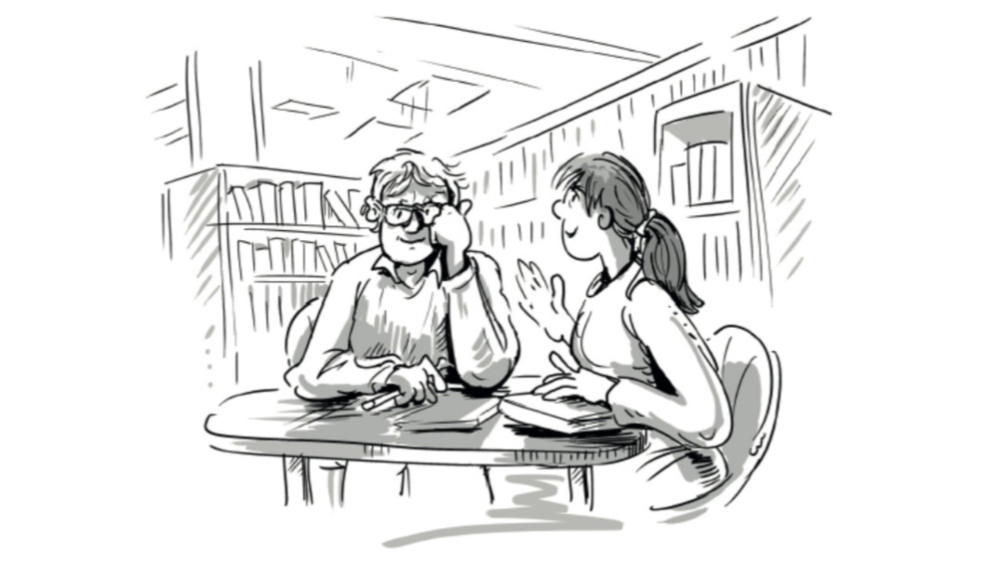
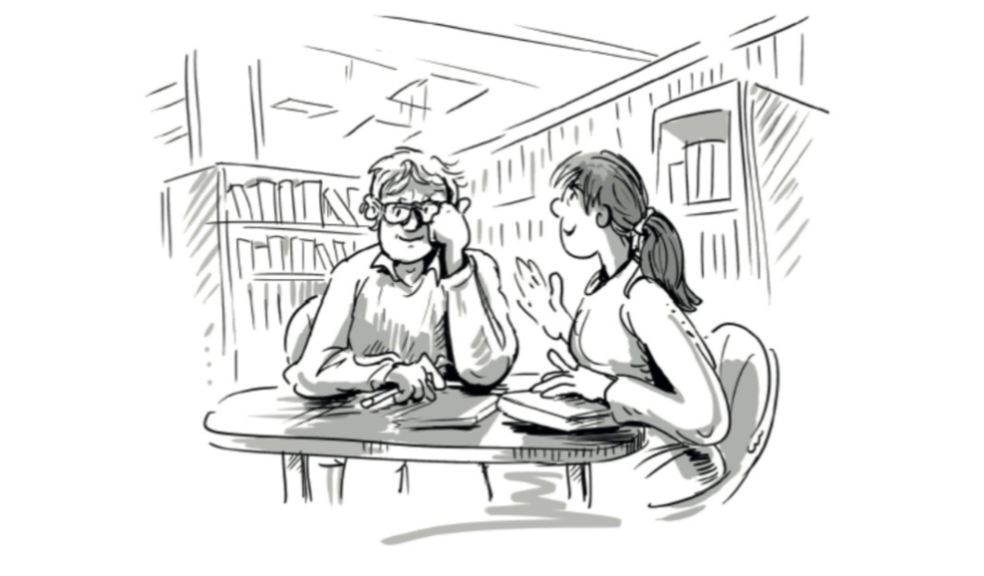
- Illustration by Mark Hannon, from the forthcoming book When Time Aligns: Stories of Care From a Dementia Companion.