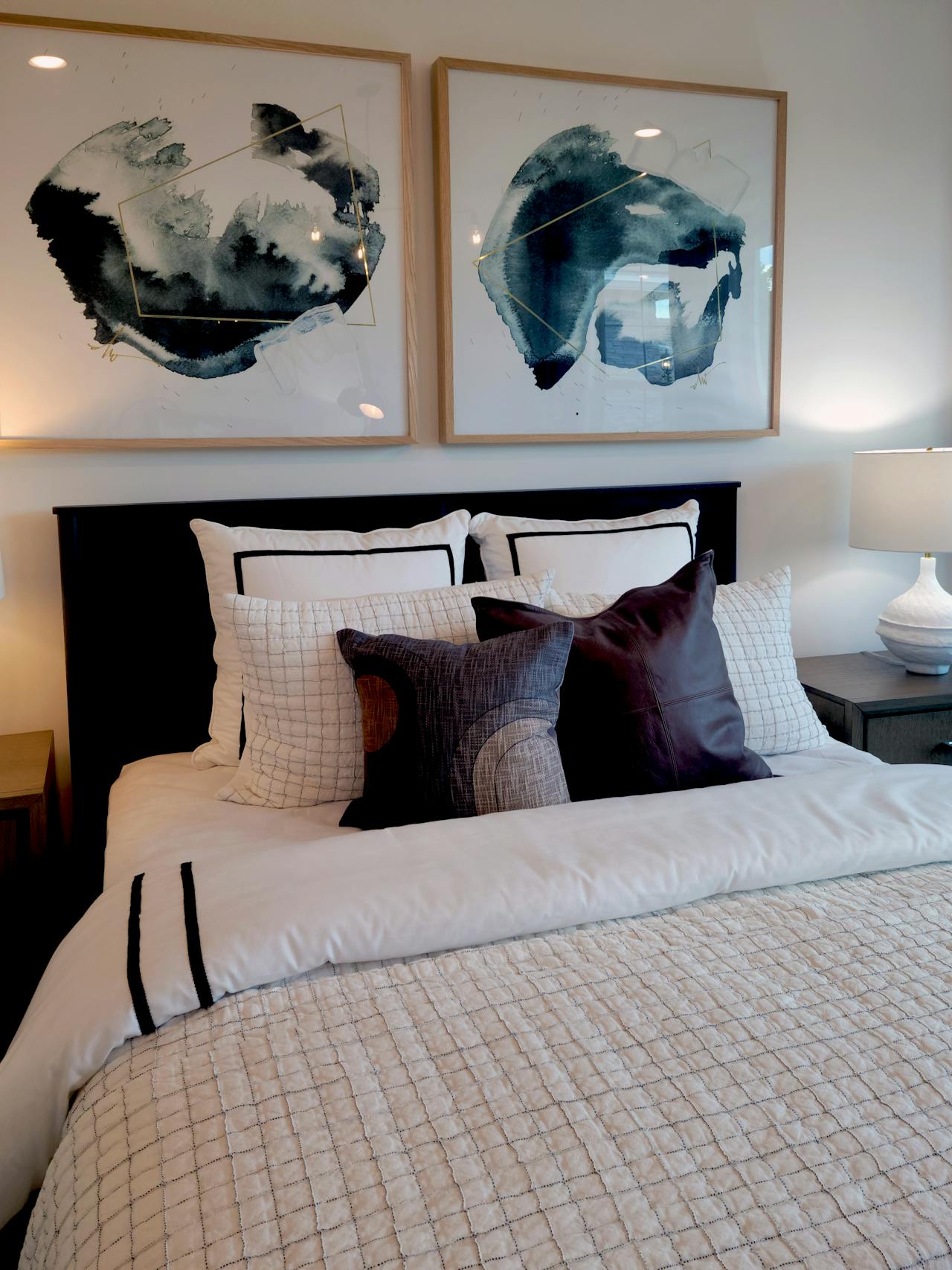







Choosing A Bed When You Have A Specific Room Style: Tips
Walk into any bedroom that's been thoughtfully designed and the bed always belongs there. Walk into one that's been assembled rather than designed and the bed often sits at odds with everything around it. The difference isn't usually about money or taste. It's about whether the bed was chosen with the rest of the room in mind or whether it was bought first and the room got dressed around it after the fact.
Why The Bed Sets The Rule
The bed is the largest object in almost any bedroom. It dominates sightlines, anchors the floor plan, and dictates how the eye moves through the space. Get it wrong and no amount of clever curtain choice will hide the mismatch. Get it right and most of the rest of the room falls into place around it without much effort.
If you're working with a defined style, Scandinavian, mid-century, traditional English, industrial, Japanese-inflected minimalism, the bed has to belong to that style rather than sit alongside it. A pillow-top divan in heavy padded fabric ruins a clean Scandinavian space no matter how perfect the side tables are. A metal-framed industrial bed will look out of place in a softly upholstered traditional bedroom. The bed sets the rule, and everything else either supports it or undermines it.
How To Read Your Own Style Honestly
Most people overestimate how committed they are to a single style. You might describe your taste as "Scandinavian" while actually owning quite a lot of dark wood, or call yourself "traditional" while gravitating toward clean lines whenever you actually shop. Before choosing a bed, it helps to look at what you already own and what you keep being drawn to, rather than what you'd describe yourself as liking in the abstract.
A useful test is to look at the three or four interior images you've saved in the last year and ask what the beds in those rooms have in common. Are the headboards low or high? Upholstered or hard? Wood or metal or fabric? Are the beds raised off the floor or close to it? Whatever pattern emerges is closer to your actual preference than any label you might use.
The Material Decision Drives The Rest
Once you know roughly what style you're aiming for, the material of the bed frame is the next decision and it constrains almost everything that follows. Solid wood frames pull a room toward warmth and tradition, even when the design is contemporary. Metal frames cool a room and lean toward modernism or industrial styling. Upholstered frames soften a room and add a hotel-like formality.
You can mix materials elsewhere in the room, of course. A wooden bed can sit happily with metal lamps and an upholstered chair. But the bed's material will dominate the perceived temperature of the space more than any other single choice. If your room style depends on a particular feeling, cool minimalism or warm enveloping comfort, the bed material has to support that feeling.
This is where it pays to browse beds for different room styles before committing to anything. Looking at how the same brand handles wooden, metal, and upholstered options in their range gives you a sense of which direction a bed pulls a room, and which will work with what you already have.
The Headboard Question
Headboards do disproportionate aesthetic work, partly because they're often the most visible element of the bed from anywhere in the room. Low headboards are quieter and tend to support minimalist or modern styles. Tall headboards are more dramatic and lean toward traditional or hotel-influenced styling. Curved, tufted, or button-detailed headboards belong to particular historical references; flat, plain headboards are more flexible.
The wall behind the bed matters too. A heavily textured or patterned headboard fights with patterned wallpaper or strong artwork; a plain headboard can balance a busy wall behind it. If your room style includes feature walls or visible texture, the headboard needs to work with that rather than compete.
Proportion Mistakes That Wreck Otherwise Good Rooms
Even within the right style, beds get scaled wrong more often than people realise. A king-size bed in a small bedroom can look stylish in isolation and overwhelming in context. A divan with no visible legs in a high-ceilinged room can feel squat. A four-poster in a low-ceilinged room is usually a mistake regardless of taste.
The honest answer is that your bed has to be proportional to your room, and the room's proportions are mostly outside your control. A genuinely tiny bedroom can carry a small but well-styled double better than a king-size you've squeezed in. A larger bedroom needs a bed scaled up to match, or the room will look unfinished.
This is one of those decisions where measuring your space and thinking about ceiling height, window position, and door swing pays off more than browsing more images would. Designers do this measurement work as a matter of course; consumers often skip it and regret the result.
What Style You Cannot Really Hide
Some style choices in beds are nearly impossible to disguise. A frame with strong period detail, like Victorian iron curls or French rococo curves, will read as that period no matter what you put around it. A very contemporary frame in glossy lacquer will resist being softened. If you choose a strong-style bed, you're committing to a room that supports it; trying to neutralise the bed later through soft furnishings rarely works.
The safer commitment, if you're unsure about long-term style direction, is a bed with quieter design language. Plain wooden frames, simple upholstered headboards in neutral fabrics, clean-lined metal designs, all read as flexible across multiple style directions. You can dress them up or down, change the room around them, and they'll continue to look intentional.
When To Buy The Bed First
If you're starting a bedroom from scratch, with empty walls and no furniture yet, the bed should genuinely be the first purchase. Building the rest of the room around a known bed produces better results than reverse-engineering the bed into a partially-finished room. The bedside tables, the chest of drawers, the lighting, the rugs, all get easier to choose once the bed is in place.
If you're refreshing an existing bedroom and the bed doesn't fit the style you're now aiming for, replacing the bed is usually the highest-impact change you can make. Repainting walls or changing curtains in a room with the wrong bed mostly puts a fresh frame on a problem that hasn't moved. Replacing the bed shifts the room's identity at the level that matters.
The Bed That Outlasts The Style
The best aesthetic decision for most people isn't choosing the bed that perfectly fits your current style but choosing the bed that will still look right after your style has shifted slightly. Few people maintain identical taste across ten years, and bed frames are typically owned for that length of time or longer. A bed that's flexible across adjacent styles will look better in five years than one that's locked into your exact current preference.
This isn't an argument for boring beds. It's an argument for choosing beds with good fundamentals (proportion, material quality, headboard design) over beds with strong trend-specific details. The fundamentals carry; the trends date.