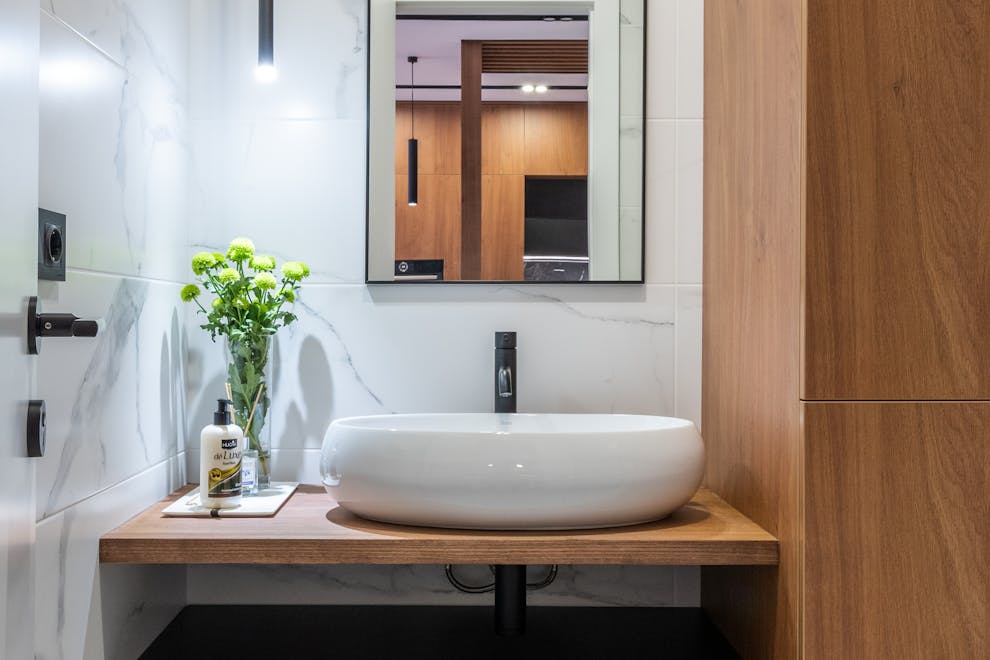






9 Natural Teak Bathroom Vanity Benefits: Durability, Moisture Resistance & Style
If daily steam, splashes, and temperature swings have turned cheaper cabinets into warped eyesores, a solid-teak vanity is the easy upgrade. This legendary hardwood once served on ship decks because its dense, oil-rich grain shrugs off water. The same grit lets today’s premium teak bathroom vanities—like the handcrafted options from Willow Bath and Vanity—outlast trends while taming humidity. In short, buy teak once and enjoy a bathroom that feels like a spa for decades.
1. Unmatched durability: built to last for decades
We expect a vanity to take daily knocks—hair-dryer drops, kids slamming drawers, and the occasional rogue shampoo bottle. Teak shrugs these off. Its fibers pack tightly together, giving the wood a Janka hardness of about 1,070 pounds-force—firm enough to resist dents yet not brittle.
That density does more than prevent scratches. It locks in screws, dowels, and dovetails, so joints stay tight year after year. Doors stay aligned, drawers glide smoothly, and each pull delivers a reassuring solidity lighter woods cannot match.
Real-world lifespan tells the same story. Marine builders still rely on teak deck planks that endure salt spray for decades. In a relaxed bathroom, the same oils and grain structure let a well-made teak vanity survive multiple remodels. One wood-science handbook rates untreated teak at 25-plus years in direct ground contact—longer than most homeowners stay in one house.
Factor in the replacement cycle cost. Swapping a swollen MDF unit every ten years feels cheap at first, then drains the budget. Invest once in solid teak, and you buy peace of mind along with the furniture. That is durability you can bank on.
2. Natural moisture resistance: warping and rot, solved
Bathrooms punish timber with splashes and lingering steam. Most woods absorb that moisture, swell at the seams, and crumble from rot. Teak behaves differently. Its grain is infused with natural oils and rubber-like resins that repel water much like a waxed raincoat. Place a bead of water on a teak off-cut and it stays on the surface instead of soaking in. Those oils earn teak a “very durable” decay-resistance rating in wood-science tests, placing it above many hardwoods for service life in wet zones.
That built-in protection stops cabinet sides from ballooning when the shower runs hot, prevents veneer from peeling around the basin, and keeps musty odors from forming in dark corners. Door gaps stay crisp, drawer slides remain smooth, and the vanity still looks fresh after years of splash-heavy tooth-brushing.
The advantage shows up in coastal climates too. Florida’s salt-laden humidity can warp cheaper units in a single season, yet shipbuilders trust teak to survive full ocean submersion for decades. A steamy ensuite is mild by comparison. If mildew and swollen panels turned past vanities into throw-away furniture, solid teak ends the cycle.
3. Low-maintenance ownership: wipe, relax, repeat
We all love the warmth of wood, yet no one volunteers for a high-maintenance routine. Teak keeps chores light. The same oils that repel water also block grime, so splashes bead, soap residue fails to stain, and fingerprints disappear with a quick swipe of a damp cloth.
Weekly care is straightforward: wipe, dry, and move on. If you want the wood to stay honey-gold, apply teak oil once or twice a year. Prefer a deeper, aged patina? Skip the oil and let time handle the coloring. Either choice takes minutes, not hours.
According to Explore Wood, teak delivers a 50-plus-year service life outdoors under minimal upkeep—a temperate bathroom only extends that margin. Compare that to veneered MDF, where one small leak can demand full replacement, and the maintenance edge becomes a budget edge too.
Because teak’s oils deter mould, termites, and common household bacteria, you can skip harsh chemical cleaners. A mild soap handles routine hygiene, keeping indoor air fresher and your schedule clearer. In short, teak asks little yet gives plenty, exactly what we wish every household surface did.
4. Timeless warmth and beauty: a spa mood that never dates
Step into a bathroom finished with hard tile and cold chrome, and it can feel clinical. Set a teak vanity in the same space and the mood shifts at once. The wood’s golden-brown tone reads friendly and spa-like, softening all that porcelain without begging for attention.
Designers call this the “warmth and character” effect. According to the National Kitchen & Bath Association’s latest Bath Trends Report, wood-faced vanities now lead painted cabinets 62 percent to 53 percent as homeowners seek biophilic touches. Teak excels here: some boards run straight-grained, others wavy, so every piece feels unique.
Style longevity matters too. Where trendy colors fade, teak’s earth tone pairs with nearly any palette—black fixtures, marble tops, coastal blues, Japandi neutrals. Repaint the walls years from now and the vanity still fits. Teak also ages gracefully; normal sunlight deepens the color toward rich amber, like leather gaining patina rather than losing polish.
Because beauty lies in the wood itself, not a surface foil, small bumps and scratches blend into the story instead of demanding touch-ups. A decade on, a teak vanity often looks better than the day it arrived, showing that elegance and staying power can share the same mirror.
5. Design versatility: from Japandi calm to coastal cool
Teak is a shape-shifter. Leave the wood in a clean-lined floating cabinet and it feels sleek and modern. Carve it into a shaker frame and it suits a farmhouse remodel. Add fluted drawers and matte-black pulls and you create a Japandi spa retreat. The material’s neutral tone behaves like a chameleon, pairing with white marble, bold encaustic tile, or charcoal walls without clashing.
That flexibility matters when styles change faster than we renovate. Swap chrome taps for brass, trade subway tile for terrazzo, or repaint the walls a deep green; the teak vanity still looks intentional, never dated. You can even refinish it for a driftwood wash or a richer espresso stain; solid wood takes new colour gracefully, unlike laminate.
Size and format options widen the possibilities. Teak’s density allows thinner panels without losing integrity, so makers offer everything from compact 24-inch singles to expansive 96-inch doubles—Willow Bath and Vanity alone showcases teak models across that full spectrum—ready to host vessel sinks and countertop décor. Need a wall-hung unit to keep floors clear? The wood supports a floating install with confidence. Prefer furniture legs for a traditional vibe? The grain showcases turned details beautifully.
Choosing teak is less about locking into one look and more about future-proofing your design. Whatever trend comes next, the wood is ready to play along while still whispering quality.
6. Eco-friendly and sustainably sourced
A vanity that lasts half a century is sustainable by default. Fewer replacements mean fewer cabinets heading to landfill and fewer delivery trucks on the road. Teak goes further because reputable suppliers rely on plantation-grown timber rather than old-growth logs. According to the Forest Stewardship Council, managed forests in Indonesia, Costa Rica, and Ghana replant as they harvest, creating a renewable cycle instead of one-way extraction.
Buying certified teak—look for the FSC label—adds a verifiable paper trail of responsible forestry. Plantation systems also provide local jobs and encourage landowners to protect soil and biodiversity for decades, not seasons.
End-of-life impact matters too. Solid wood is recyclable, repairable, and ultimately biodegradable, unlike MDF bonded with formaldehyde resins. If you ever remodel, a teak vanity can be sold second-hand or repurposed into shelving because the wood stays sound. That circular potential turns premium teak into sustainable luxury: buy better, waste less, breathe easier.
7. Healthier bathroom air: low-VOC and naturally antimicrobial
Fresh paint and flat-pack cabinets can off-gas formaldehyde for months. Solid teak sidesteps the issue. Because the wood is one piece, not glue-bonded fibre, it releases negligible volatile organic compounds—solid timbers average only 2–9 ppb of formaldehyde in chamber tests, far below composite panels, according to North Carolina State University researchers. When finished with a water-based or low-VOC oil, the vanity simply smells like wood, nothing more.
Teak’s natural oils add another benefit: they slow mould and bacterial growth. SGS testing commissioned by Teakhaus found teak cutting boards achieved 99.9 percent antimicrobial activity, confirming earlier university research on wooden boards’ hygiene advantages. In a damp bathroom this means fewer black spots in corners and a surface you can clean with mild soap instead of harsh chemicals.
The result is quieter sinuses, fresher indoor air, and fewer chemical cleaners under the sink. You enjoy the warmth of real timber without trading it for fumes or hidden mildew—a simple win for everyday wellness.
8. Added home value: an instant wow upgrade
Real-estate agents love to remind us that kitchens and baths sell houses. Within that equation, a solid teak vanity works like a feature wall: visitors notice it, assume quality elsewhere, and mentally raise their offer.
First, teak signals luxury. The wood is known from yacht decks and high-end spas, so spotting it in a family bath suggests the entire remodel followed the same standard. Guests run a hand along the grain and ask where you found it; prospective buyers have the same reaction, only with cheque books.
Second, longevity becomes a selling point. When a listing mentions “solid-teak vanity with 40-year life,” viewers picture fewer future expenses. It is the bathroom equivalent of a slate roof: durable and desirable.
Finally, design neutrality helps resale. Because teak pairs with both modern brass fixtures and classic chrome, you are not locking the next owner into one look. The wood simply raises the baseline, making any style choice feel more polished.
Together, these factors turn a teak vanity into a small-footprint upgrade that lifts perceived property value long after installation.
9. Customization today, refinishing tomorrow
Off-the-shelf vanities rarely fit every nook or taste. Solid teak changes the equation because you can cut, join, and finish it like premium furniture. Need a 37-inch width or an extra-deep drawer for hair tools? A cabinetmaker can adjust teak without hitting particleboard voids or veneer seams, so you achieve a perfect fit instead of relying on filler panels.
The wood also future-proofs design whims. Years from now, if you crave a deeper walnut tone or a sun-washed driftwood look, a light sand and new stain will make the vanity feel fresh. Laminate cannot accept that kind of refresh.
Even damage is forgiving. A dropped curling iron that scorches the top can be sanded out in minutes, and dents steam back because the fibres remain intact rather than paper-thin. In a world of disposable furnishings, teak lets you keep one piece and simply update it when styles shift—a sustainable win for anyone who loves to personalise their space.
Teak vs. other vanity materials: a quick glance
|
Material |
Water resistance |
Expected lifespan |
Maintenance load |
VOC/air quality impact |
Typical price (30″) |
|
Teak (solid) |
Excellent, natural oils repel moisture |
40–50+ years |
Low: wipe and optional oil |
Very low (solid wood, low-VOC finish) |
$800–$1,500 |
|
Oak (solid) |
Good with sealing |
20–30 years |
Moderate: reseal periodically |
Low |
$600–$1,100 |
|
MDF/particleboard |
Poor, swells if wet |
5–10 years |
Replace if damaged |
Moderate to high, formaldehyde resins |
$300–$600 |
|
Plywood veneer |
Fair, edges vulnerable |
10–15 years |
Moderate: protect exposed edges |
Moderate |
$400–$800 |
Frequently asked questions
Is teak wood good for bathroom vanities?
Yes. Teak’s dense grain and natural oils give it top-tier water resistance, so it stays stable where other woods swell or rot.
Do teak vanities require a lot of maintenance?
No. Wipe spills, keep the surface dry, and oil it once or twice a year if you want to maintain the original honey colour.
Will teak change colour over time?
It mellows from golden brown to a deeper amber if kept oiled or to a silver patina if left unfinished. The change is even and attractive, not patchy or peeling.
How does teak compare to oak for bathrooms?
Oak is strong but needs regular sealing to match teak’s natural moisture defence. Teak offers similar strength with less upkeep and better rot resistance.
Are teak vanities expensive, and are they worth it?
Upfront cost sits above MDF but below many stone or exotic-wood options. Because teak lasts for decades, the lifetime cost is often lower than replacing cheaper units two or three times.
What is the best way to care for a teak vanity?
Daily: wipe moisture and toothpaste drips. Yearly: clean with mild soap, then apply a thin coat of teak oil if you wish to keep the original colour. Avoid bleach or abrasive pads.
Can I get teak in a floating or double-sink design?
Yes. Teak’s strength supports wall-hung cabinets, and suppliers offer sizes from compact 24-inch singles up to 84-inch doubles with centre drawers.
Does buying teak contribute to deforestation?
Choose FSC-certified or similar products. Plantation-grown teak is renewable, and responsible sourcing avoids old-growth forests, so your purchase supports managed forestry rather than clear-cutting.
What happens if I damage the surface?
Light scratches sand out and dents can be steamed back. Because the material is solid, you can refinish the top without exposing particleboard or veneer seams.
Will a teak vanity add value to my home?
Quality fixtures signal a well-cared-for property. Estate agents report that premium materials in bathrooms—especially durable woods like teak—enhance buyer perception and can nudge offers upward.