





A Guide to Dissertation Printing and Binding
Writing your dissertation can take a long time and require a lot of effort. After endless nights of research, many students rush to submit as soon as they are done. But before you do so, it’s important to consider the final presentation first.
Once you’ve proofread and double-checked your references, you need to find high-quality printing and dissertation binding to make sure the appearance of your copy does justice to the seriousness of your work.
It’s also worth remembering that employability matters alongside academic achievement, and completing accredited short courses such as graduate first aid training can give new graduates a valuable edge when entering the job market.
This article takes you through everything you need to keep in mind when printing or binding your dissertation.
Get the printing right
Before you start printing your dissertation, you should check your university’s guidelines. Many have specific rules on font, spacing, margin sizes, page numbering, and cover requirements.
Starting with the right layout avoids issues that can turn an otherwise straightforward process into a stressful and time-consuming exercise. Something simple like changing spacing or margins during printing can shift content and page breaks.
Additionally, you should decide whether to go with colour or black-and-white printing. This helps avoid last-minute errors that could cause you to miss your submission deadline.
The paper also matters. Lighter paper works for some documents, but going for a thicker one improves opacity and feel. This is especially important when printing on both sides.
For a PhD dissertation, it’s also advisable to choose acid-free paper. This prevents yellowing, brittleness, and decay while your dissertation sits in the archives.
Things to watch out for when binding a dissertation
Once you’ve printed the pages, it’s time to put everything together. The first decision you need to make is the type of dissertation binding that best suits the work you’re submitting.
The binding type you choose should reflect the importance of your academic work. For instance, a PhD dissertation requires a higher-quality binding than a bachelor’s.
Additionally, you should take into account the weight and lifespan of your academic work. Thick or heavy dissertations require stronger binding, such as hardback, to prevent the pages from becoming loose when handled. This also applies to dissertations that will be kept in a library.
What are the different types of binding?
There are different types of binding, and the choice affects the quality.
Hardcover Binding
This is the best option for PhD dissertations and other important academic work. It gives your work a formal and classy look that’s likely to leave a good first impression on your examiner.
This kind of binding is also durable, making it a great option for bachelor's, master’s, and PhD dissertations.
Thermal Binding
Thermal binding has a transparent cover that ensures that your dissertation title is the first thing people see. The back cover is made from faux leather and is available in numerous colours, allowing for a bit of personalisation. Thermal binding is a good choice if you need a couple of copies of your work or want to store your thesis.
Paperback
Paperback uses a light cover and allows you to be creative with the appearance of your academic work. You can personalise with different colours, fonts, photos, and graphics while maintaining a clean professional look.
Another advantage of using paperback is that it makes your thesis lighter and easier to read. Just make sure it meets the requirements of your university or degree program before starting on the design.
Spiral Binding
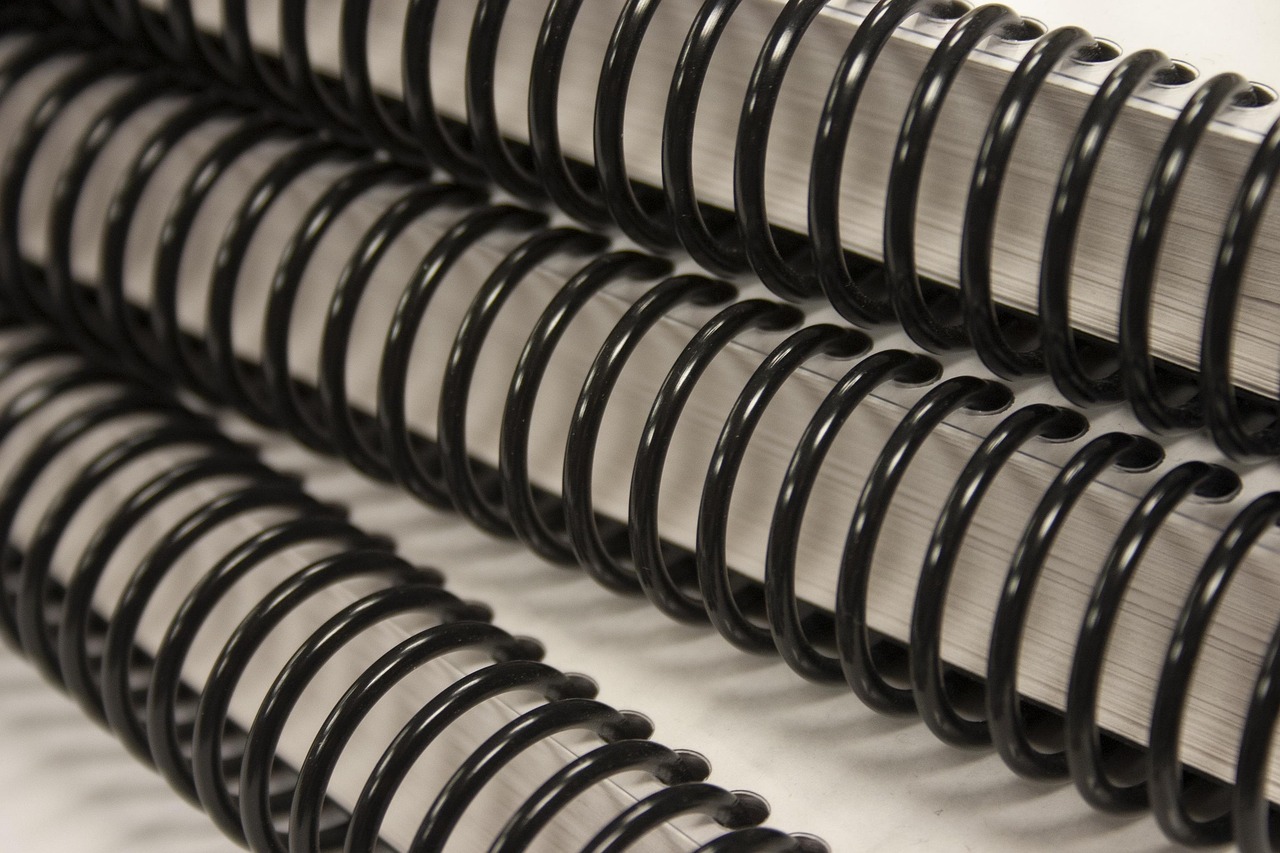
This is similar to thermal binding, with the main difference being that it uses spirals instead of glue. You get a transparent front cover and an opaque back cover for a simple yet sleek presentation.
Spiral binding is mostly used for drafts and small term papers as the cost is low. It's not advisable for the final presentation, but you can use it for drafts. You have an option between plastic and metal spirals depending on your budget. The metal spirals are more durable, but the plastic ones are easier to adjust.
Lastly, remember that the printing service you choose will play a big part in the quality of the final outcome, as it ties directly to the print quality, paper options, binding quality, and configurability.
Image by CWilkinson from Pixabay