






First-time farming families building sustainable businesses while restoring natural habitats
Two first-time tenant farming families are building sustainable businesses with bold plans to rewild the natural landscape.
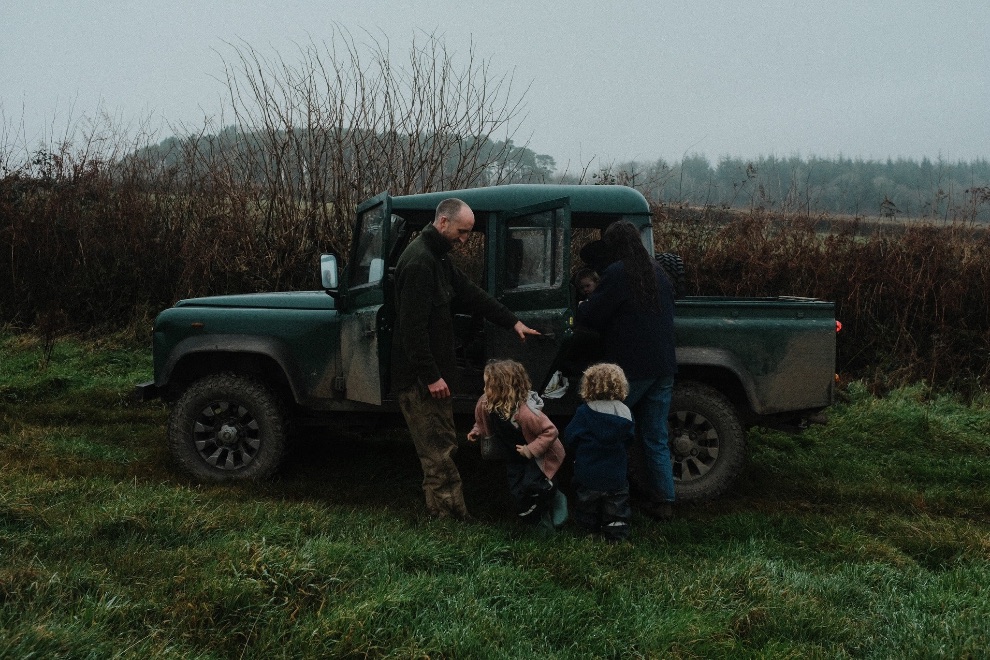
Jack and Alice Pemberton became tenants of 190-acre Ramsland Farm, located on the Flete Estate in South Devon, in 2024 with Will and Liv Norton taking on the lease of neighbouring 35-acre Hole Farm in 2025.
The couples have partnered with Plymouth and South Devon Community Forest to create tree planting schemes to support their two distinct businesses with a shared focus on recovering the land to be ecologically abundant and productive. More than 20,000 trees will be planted across the two farms alongside schemes to reintroduce wildflower meadows, orchards, and increase hedgerow coverage, contributing to a total 65 tree-planting and woodland creation schemes planned for delivery by the Plymouth and South Devon Community Forest this season.
Jack and Alice, with their two daughters aged five and seven, moved to Ramsland Farm with the ambition of producing 100% pasture-fed beef and sheep while creating a beautiful, rich, biodiverse habitat on their land.
The couple developed a plan for their 190 acres, with an additional 200 acres soon to be added, alongside Plymouth and South Devon Community Forest who granted them support for an extensive agroforestry project, utilising Defra’s Trees for Climate Fund. The scheme will see more than 14,500 trees planted on their land creating open lowland wood pasture habitats linking new hedges and orchards.
Jack, 38, said the project, which began this autumn, would create a range of habitats across the land managed in tandem with grazing beef and sheep in a low-impact system prioritising soil health, biodiversity enhancement, and producing more forage growth to support healthy livestock.
“It's an absolutely incredible opportunity for us,” Jack said. “We're farming in a very different climate and market now. You’ve got to play the cards in front of you and we hope we're setting this up as a resilient farm for the future.”
Before they took on the tenancy, Jack and Alice spent time living in London with Jack working for an online grocer and Alice training as a butcher. More recently, Jack worked as a foreman on three separate farms while Alice found time to work as an organic growing assistant on a 200-acre organic mixed farm.
Alice said the project to regenerate the farm may have taken a lifetime, but with support from the Plymouth and South Devon Community Forest the benefits will be seen much sooner.
She said: “Within the next three to five years, we'll have willow and hazel that will act as shade and shelter, making the farm more resilient to hot summers and wet winters. This project would have taken us many years, but this support gets us here very quickly.”
Will and Liv, both 37, had lived on the Flete Estate for several years before taking on the tenancy of Hole Farm with their three children. The family plan to expand their established catering business Rootle to offer a unique cookery school that connects people with food origins, local landscapes, and the network of food producers in South Devon.
“The planting scheme we're undertaking as part of the community forest work is putting in place a farming system which reflects some really progressive ideas,” Will said.
“Working with Plymouth and South Devon Community Forest is allowing us to create what we hope will be a living example of a system that benefits nature while producing food in equal measure.”
With preparations beginning this autumn, more than 5,000 trees will be planted at Hole Farm for a mixture of uses from orchards producing fruit and nuts, woodland expansion, and the creation of agroforestry strips.
“The planting will form the backbone of our plans for a sustainably minded cookery school,” Liv said.
“We hope to make the farm a place that will offer more holistic education and experiences with a strong emphasis on ecologically sensitive farming and environmental restoration. Our goal is to connect people with food origins, local landscapes, and our community of farmers.”
Kat Deeney, Director of Plymouth and South Devon Community Forest said:: “We’re proud to support these two innovative farm projects, where large-scale tree planting is restoring precious biodiversity across the area, while contributing to productive, nature friendly farming in an historic farming landscape.
“Together, these neighbouring businesses are demonstrating how nature recovery can go hand in hand with bold, forward-thinking land management. In partnership with the Plymouth and South Devon Community Forest and with Defra’s Trees for Climate funding, their leadership shows what a thriving, climate-resilient rural landscape can look like for generations to come.”
Image: Ramsland Farm. Credit: Beej Harris-min.