





Backpacking across Asia: how to cross borders without losing connection
Embarking on a backpacking journey across the vast and diverse landscapes of Asia is a rite of passage for travelers seeking adventure, culture, and the thrill of the unknown. From the humid jungles of Southeast Asia to the arid steppes of Central Asia, the experience is defined not just by the destinations, but by the movement between them. Border crossings in this continent are legendary; they can be chaotic, bureaucratic, and occasionally confusing, yet they mark the exciting transition from one distinct culture to another.
In the past, crossing a land border often meant entering a communication black hole, leaving travelers disconnected from maps, translation tools, and loved ones until a local SIM card could be sourced. However, modern backpacking has evolved, and maintaining a digital lifeline is now a critical component of safety and logistics. Understanding these overland routes and ensuring connectivity transforms a stressful transit into a seamless adventure.
How do you stay connected when moving between countries?
Managing mobile connectivity is a major logistical challenge for multi-country backpackers. Historically, this involved a repetitive cycle of hunting for local vendors, deciphering foreign data plans, and physically swapping SIM cards at every new frontier. This method, while sometimes cheaper, often results in downtime right when you need it most—navigating a new border town or translating immigration questions. A modern alternative is digital SIM technology, which allows travelers to download data profiles directly to their phones.
For those planning a multi-stop itinerary, activating a regional eSIM for Asia offers a streamlined solution, covering countries like Thailand, Vietnam, and Cambodia under a single data plan. This eliminates roaming fees and the physical hassle of chip replacement. By leveraging this technology, backpackers can ensure they have internet access the moment they cross a border, allowing for immediate access to ride-hailing apps or accommodation bookings. Providers such as Amigo eSIM have revolutionized this space by offering instant activation and broad network partnerships, ensuring that travelers can hop between over 194 countries without ever losing their signal.
What are the key visa requirements for overland travel?
Navigating Asian land borders requires meticulous preparation regarding entry documentation, as rules can vary drastically between neighboring nations. While many Southeast Asian countries offer convenient visa-on-arrival services, relying on this assumption everywhere can lead to denied entry. For instance, crossing into Cambodia or Laos typically involves a straightforward form-filling process at the border, where fees must be paid in cash—specifically in clean, crisp US dollars, as damaged notes are often rejected.
Conversely, countries like China require strict advance preparation. If you are planning to cross from Vietnam into China by land, you must apply for your visa beforehand, typically in Hanoi or your home country. Interestingly, while the application might ask for flight details, overland travelers can often satisfy this requirement by submitting reserved (but unpaid) flight itineraries. Always carry multiple physical passport photos and digital copies of your documents. Being prepared with the correct currency and paperwork is the difference between a ten-minute stamp process and a multi-hour delay.
What are the best strategies for Southeast Asia border crossings?
Border crossings in Southeast Asia are generally well-trodden by tourists, but they can still be riddled with scams, delays, and inefficiencies if not approached correctly. A common pitfall for backpackers is booking "VIP" through-buses where the operator collects everyone's passports to process visas collectively. While this sounds convenient, it often leads to significant delays as you wait for the entire bus to clear immigration, and you may be overcharged for the service.
The superior strategy is to travel independently:
- Take a bus to the border town.
- Walk across the checkpoint yourself.
- Catch onward transport on the other side.
This method gives you full control over your passport and pace. When crossing, be polite but firm, ignore touts offering "express" medical checks or fake visa services, and head straight to the official immigration counters. By managing your own crossing, you not only save money but also ensure that your entry stamps are correct and that you aren't separated from your identification documents for long periods.
How does the slow boat from Thailand to Laos work?
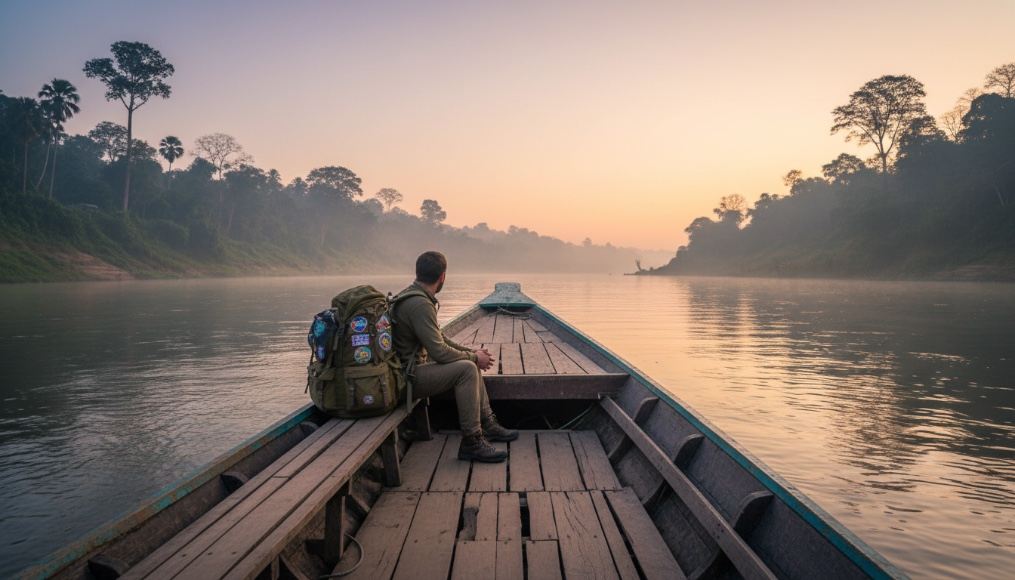
The journey from Thailand to Laos via the Mekong River is an iconic Southeast Asian backpacking route, celebrated for its scenery and atmosphere. The trip typically begins at the border crossing between Chiang Khong (Thailand) and Huay Xai (Laos). After clearing Thai immigration and crossing the bridge, travelers obtain their Lao visa on arrival. From Huay Xai, the "slow boat" takes two days to reach the UNESCO World Heritage city of Luang Prabang, with an overnight stop in the village of Pak Beng.
This mode of transport is the antithesis of a rushed flight; it forces you to slow down and appreciate the jungle-clad riverbanks. Tickets can usually be bought on arrival at the pier, though booking 2-3 days in advance is wise during the peak dry season. The boat itself becomes a floating social hub, fostering connections among backpackers that often last for the rest of their travels through Laos.
Is the bus from Vietnam to Cambodia convenient?
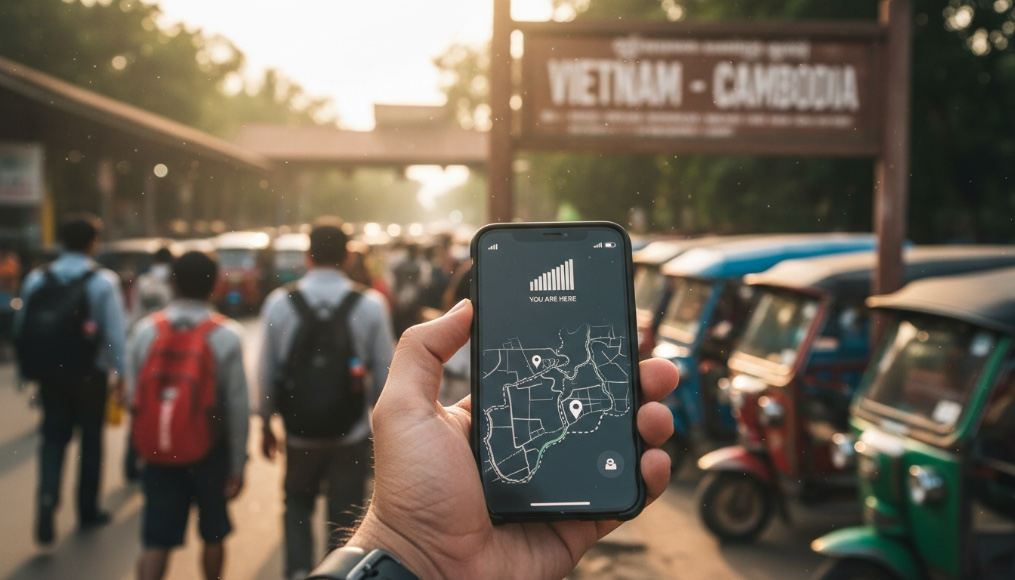
For those moving between Ho Chi Minh City and Phnom Penh, the overland bus is arguably the most convenient and cost-effective option. The journey takes approximately six to seven hours and passes through the Moc Bai (Vietnam) and Bavet (Cambodia) border checkpoints. Many reputable bus companies operate this route and offer a relatively seamless experience where the bus steward assists passengers with the border procedures. Travelers simply:
- Hand over passports and visa fee to the steward.
- Walk through checkpoints for identity verification.
- Reboard the bus.
While independent crossing is possible, the organized nature of this specific route makes the bus service highly efficient. It allows backpackers to relax in air-conditioned comfort for the majority of the trip, arriving in the heart of Phnom Penh ready to explore, without the fatigue associated with more rugged border crossings.
How difficult is the land crossing from Vietnam to China?
Crossing from Vietnam into China by land is surprisingly straightforward for prepared backpackers, offering a gateway to the stunning Yunnan province. The most popular route connects Sapa (via Lao Cai) to Hekou in China. From Sapa town center, travelers can take a local bus for roughly 30,000 VND (about $1.20 USD) to the Lao Cai border post. The process begins with a quick exit stamp on the Vietnamese side, followed by a walk across the symbolic Friendship Bridge spanning the Red River.
While the Vietnamese side is often swift, travelers should expect a more rigorous process at Chinese immigration. Queues can be longer, sometimes involving 20-30 people, and officials may ask detailed questions about your itinerary. However, the infrastructure is modern and pedestrian-friendly. Exiting the immigration building in Hekou, you enter an urban environment with taxis and buses connecting to the high-speed rail network.
What should backpackers know about Central Asian borders?
Backpacking through the "Stans"—Kazakhstan, Kyrgyzstan, Uzbekistan, and Tajikistan—offers a rugged, off-the-beaten-path experience where border crossings are less about tourist buses and more about shared taxis and marshrutkas. These borders are generally functional but can be stark and utilitarian. Transport typically involves taking a local vehicle to the border, walking across the buffer zone, and finding a new taxi on the other side.
Patience is essential, as queues can be disorganized and border guards may be thorough with luggage checks. Unlike Southeast Asia, English is less commonly spoken, so having a translation app or basic Russian phrases can be invaluable. Travelers should also be aware that some borders in this region close at night, so it is crucial to start your journey early in the day to avoid being stranded. Despite the rougher edges, the process is generally safe and efficient for tourists with valid documentation.
Are crossings between Uzbekistan and Tajikistan complex?
The border crossings between Uzbekistan and Tajikistan have become significantly easier in recent years, opening up the Silk Road to modern adventurers. The two main crossings serve different routes and budgets. The Penjikent crossing, near Samarkand, is ideal for budget travelers; a minibus from Samarkand costs mere cents, and the crossing is a simple walk, followed by a cheap shared taxi to Penjikent or Dushanbe. Conversely, the Oybek crossing, used for travel between Tashkent and Dushanbe, often involves a more expensive taxi ride (around $25 USD) to reach the border.
The procedure is standard: exit one side, walk across, and enter the other. A critical detail for Tajikistan is the registration requirement; if you plan to stay longer than 10 days, you must register with the police (OVIR) to avoid heavy fines upon exit. Having a printed copy of your eVisa is also highly recommended to speed up the entry process.
Which digital resources are essential for modern backpackers?
In the digital age, a smartphone is as essential as a sturdy backpack. Beyond social media, specific apps can drastically improve the safety and efficiency of overland travel. Offline mapping tools like Maps.me are indispensable for navigating border towns where signal might be spotty or before you've secured a new connection. For transport, platforms like 12Go.asia help in checking schedules and booking buses or trains across much of Southeast Asia. Communication apps such as WhatsApp or Viber are the standard for contacting hostels and local drivers.
Furthermore, maintaining access to cloud storage for digital copies of your passport, insurance, and visas is a vital backup strategy. To ensure these tools are always accessible, choosing a reliable global supplier of eSIM cards ensures you have data the moment you cross the border. This continuous connectivity allows you to:
- Verify exchange rates in real-time.
- Translate signs instantly.
- Keep friends and family updated on your movements.