





The 'Leftovers' Party: The Most Sustainable Way to Gather
In the hierarchy of social gatherings, the "Dinner Party" usually sits at the top, draped in linens and requiring a three-page grocery list. But as our lives become busier and our awareness of food waste grows, a new, more rebellious contender has entered the scene: The Leftovers Party.
It sounds like a punchline, but the concept is gaining traction among those who value sustainability as much as they value friendship. At its core, the Leftovers Party is a communal effort to empty the fridge, reduce waste, and enjoy the company of friends without the performative stress of traditional hosting. It is the ultimate "come as you are" gathering—both for the guests and the food.
The Environmental Case for a Fridge Clear-Out
Food waste is a global crisis that happens quietly in our own kitchens. According to environmental data, a staggering percentage of all food produced is never eaten, often ending up in landfills where it generates methane. Much of this waste occurs not at the supermarket level, but at home—the half-used jar of pesto, the three stalks of celery, or the surplus of roasted vegetables from Tuesday’s dinner.
The Leftovers Party turns this environmental problem into a social solution. Instead of letting those ingredients wilt into an eventual "trash day" ritual, they become the building blocks for a creative, eclectic feast. It is a celebration of what we already have, rather than a pursuit of what we are told we need.
How It Works: The "Chopped" Style Approach
The beauty of a Leftovers Party is its unpredictability. Unlike a potluck, where everyone brings a polished, finished dish, a true Leftovers Party involves bringing the "bits and bobs."
The host provides the "anchors"—usually a large pot of grains, a simple pasta, or a massive pile of toasted sourdough. The guests bring the "wildcards." One friend might bring the remains of a Sunday roast; another might bring half a block of halloumi and a bag of spinach that’s on its last legs.
When everyone arrives, the magic happens in the kitchen. It becomes a collaborative, "Chopped"-style cooking session where the group decides how to fuse these disparate items. That leftover roast beef becomes the star of a stir-fry with the wilting peppers; the various cheeses are melted into a "fridge-bottom" fondue. This process removes the hierarchy of the "host" and "guest," making everyone an active participant in the meal’s creation.
The Joy of Group Dining Without the Pretense
There is something profoundly liberating about group dining when the food isn't perfect. Traditional entertaining often carries an undercurrent of anxiety—will the soufflé fall? Is the steak overcooked? When the menu is literally composed of leftovers and "rescued" ingredients, that pressure vanishes entirely.
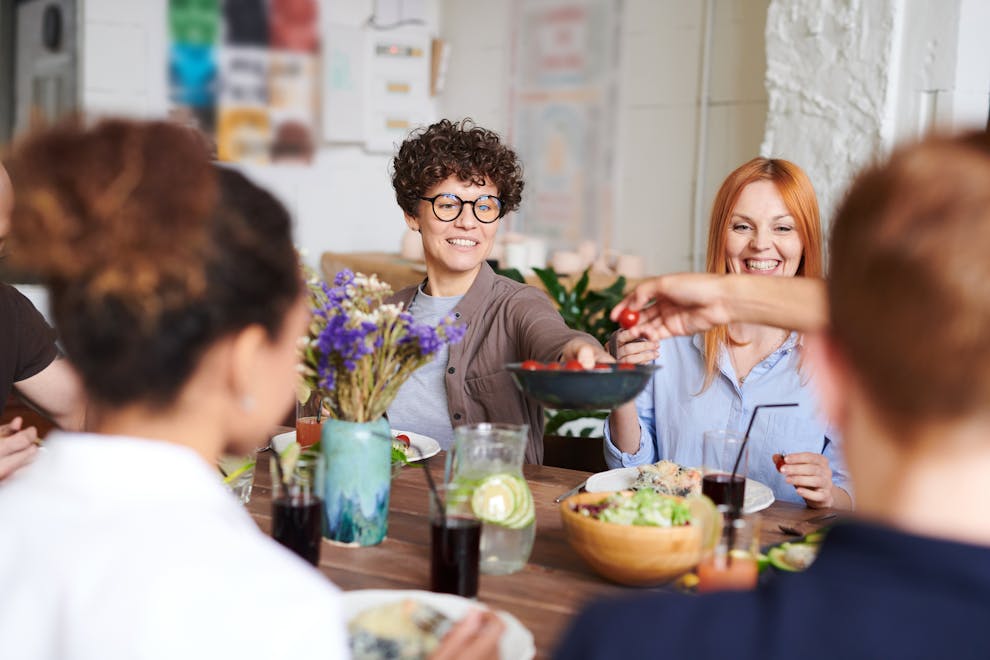
In this setting, the focus shifts away from the culinary execution and toward the conversation. Because the meal is a bit of a gamble, the atmosphere is inherently casual. You aren’t sitting down to a formal three-course meal; you are engaging in a shared experiment. This creates a relaxed, low-stakes environment where people feel more comfortable being their authentic selves. There is no need to dress up the table or your personality when you’re eating "fettuccine-a-la-everything."
Setting the Rules of Engagement
To ensure the party is a success (and safe), it helps to have a few ground rules:
● The "Sniff Test" Still Applies: Guests should only bring items that are still perfectly good to eat. This isn't a compost party; it’s a culinary rescue mission.
● The Pantry Staples: The host should ensure they have the "connectors" on hand—olive oil, spices, garlic, onions, and perhaps some eggs. These are the items that can turn random ingredients into a cohesive meal.
● The "Wildcard" Drinks: The same rule applies to the bar. Encourage friends to bring the half-finished bottle of wine from their weekend or the random craft beers left over from a previous BBQ.
Why It Strengthens Friendships
Traditional hosting can be isolating; the host spends half the night in the kitchen while the guests hover in the living room. A Leftovers Party forces everyone into the heart of the home. You learn a lot about your friends by what’s in their fridge. You see their tastes, their habits, and their creativity.
Furthermore, this type of gathering makes hosting accessible to everyone. In a cost-of-living crisis, many people shy away from hosting because of the expense of buying a "fancy" dinner. The Leftovers Party costs almost nothing. It proves that the "wealth" of a social life isn't measured by the price of the ingredients, but by the frequency and quality of the connection.
In the End Sustainability is Delicious
The Leftovers Party is more than just a way to save a few pounds or clear out a shelf in the refrigerator. It is a statement against the "disposable" culture we live in. It teaches us to see potential where we once saw waste and to find joy in the mismatched and the imperfect.
By the time the night ends, the fridge is empty, the hearts are full, and the planet is just a tiny bit better off. We don't need a five-star menu to have a five-star evening. We just need a few good friends, a sense of humor, and whatever happens to be behind that jar of pickles on the bottom shelf.