





UK Working-at-Height Risk Assessments
Working-at-height incidents remain one of the leading causes of serious injury and fatality across UK construction and trades. The HSE figures are sobering. Falls from height accounted for the largest share of work-related fatalities in recent reporting periods. The gap between sites that run rigorous risk assessments and those that do not produces the difference. The risk assessment is the document that separates a compliant site from a problem site.
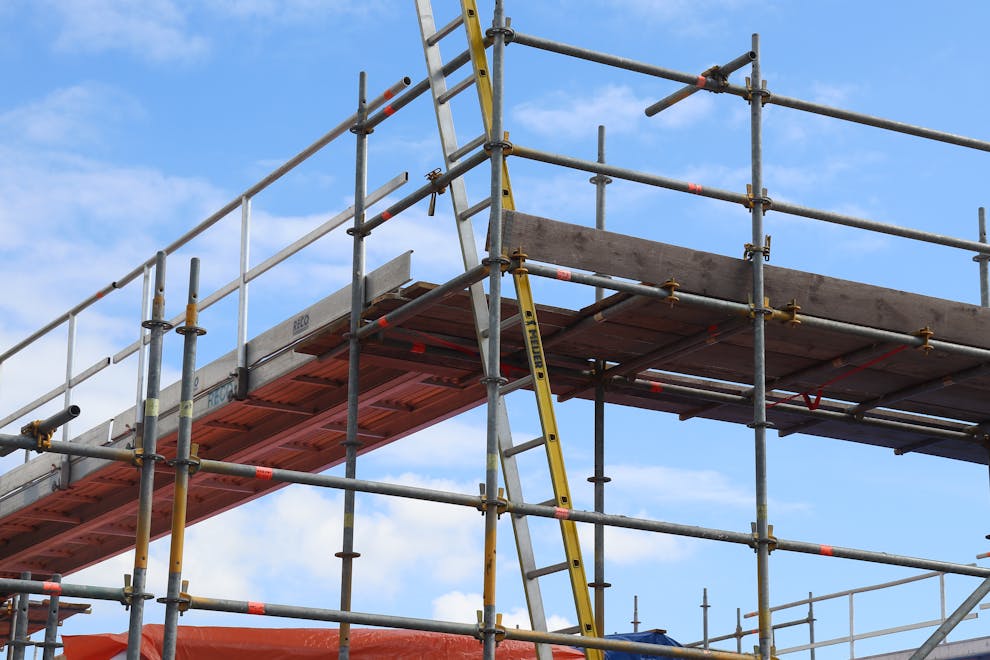
Alt text: A UK tradesperson working at height with full safety equipment and scaffolding
The discipline rewards practical, structured input rather than tick-box compliance. Tradespeople and site managers benefit from training materials and a structured approach to conducting a risk assessment for work at height that maps to the realities of UK construction. The right assessment process catches the hazards a generic checklist misses.
Why Has the Working-at-Height Risk Assessment Become a Higher-Stakes Process?
Three factors have raised the stakes on the risk assessment in the last decade. The first is the regulatory focus. The HSE has tightened enforcement around work-at-height matters across the UK construction sector, and prosecution outcomes have grown more serious for non-compliant sites.
The second is the insurance and liability environment. Insurers increasingly require documented risk assessments before covering site work.
The third is the workforce-composition shift. UK sites carry more apprentices, agency workers, and short-tenure contractors than the prior generation. The risk assessment is what protects both the worker and the principal contractor when an incident occurs. The HSE's overview of work-at-height regulation outlines the legal framework employers must operate within. Site managers who treat the assessment as central to daily routine clear inspections cleanly.
What Should Tradespeople Verify Before Working at Height?
Six checks belong on every shortlist before any tradesperson begins work at height. The table below summarises the priorities for UK site managers.
|
Check |
Why It Matters |
What to Confirm |
|
Risk assessment documented |
Legal and insurance requirement |
Site-specific assessment, dated, signed |
|
Equipment inspection |
Failures cause most incidents |
Recent inspection certificate on each unit |
|
Training records |
Competence is verifiable |
Working-at-height ticket for every operative |
|
Edge protection |
Falls from open edges |
Guardrails or lanyard anchor points |
|
Weather assessment |
Wind shifts the calculation |
Daily check, not just at shift start |
|
Rescue plan |
Often the gap on small sites |
Documented procedure, tested at induction |
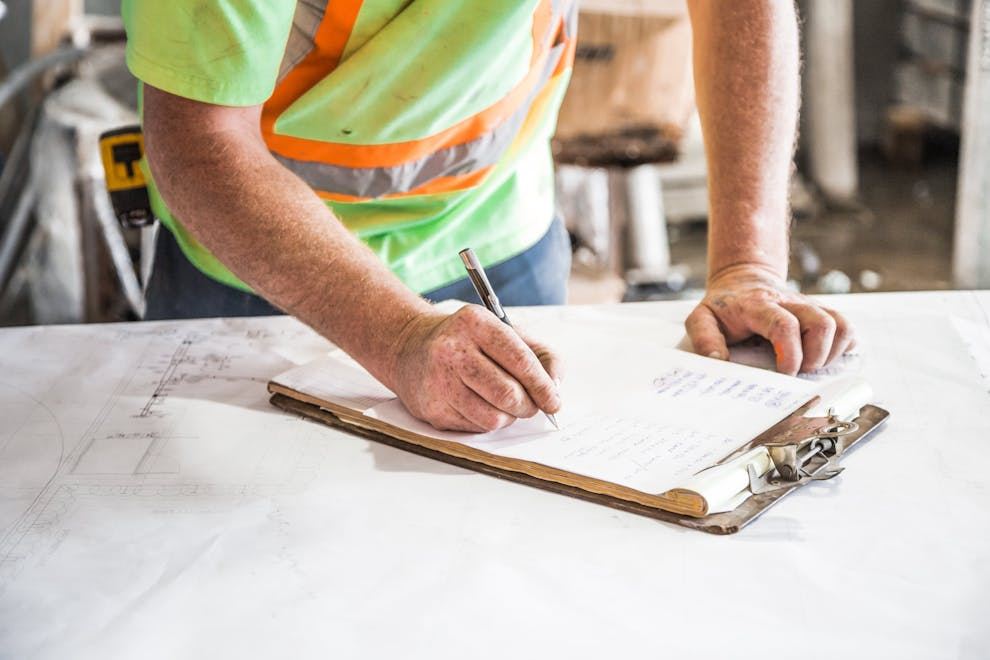
Alt text: A site manager conducting a working-at-height risk assessment with documentation
A site that has clear answers across these six points operates above the compliance baseline. A site that improvises on any of them sits below the line where the HSE expects to find it. Closing the gap is more about routine discipline than about heavy investment in new equipment.
Which Risk-Assessment Steps Carry the Most Weight?
Three steps in the assessment process carry the most weight in practice. The first is hazard identification at the site-specific level. Generic templates can start the work but cannot finish it. The site-specific elements (existing structures, weather exposure, neighbouring activity) all change the assessment.
The second is the control-measure hierarchy. Working at height should be avoided where reasonably practicable. Where it cannot be avoided, fall prevention measures come first, with fall arrest measures used as the last layer. The third is the review trigger.
Risk assessments need refreshing when conditions change, not just at fixed intervals. The HSE's construction-safety guidance reinforces the practical points UK tradespeople need to apply on site each day. Real assessments update with the work as it progresses.
What Common Mistakes Surface in Working-at-Height Assessments?
Several patterns recur in HSE investigation reports. The first is using a generic template without site-specific tailoring. A document that could apply to any site does not protect the workers on a specific one.
The second is documenting controls that are not actually in place. The paperwork has to match the reality on site. The third is forgetting the rescue plan. Many assessments stop at fall prevention without addressing what happens if a fall occurs.
The fourth is briefing only the lead tradesperson rather than the full crew. Every operative working at height needs to understand the assessment. The fifth is letting the assessment go stale across the project. Conditions change as work progresses, and the assessment that suited the early phase rarely suits the closing phase. Even local press coverage like the Devon coverage of UK construction-market trends reflects how site complexity has grown alongside the volume of work.
What Is the Bottom Line for UK Trades and Site Managers?
The working-at-height risk assessment rewards site managers who treat the document as a living tool rather than a compliance artefact. Sites that integrate the assessment into daily routines (toolbox talks, shift inductions, weather checks) stay ahead of incidents. Sites that file the assessment and forget it are the ones that produce the post-incident reports nobody wants to write.
Devon's local-safety coverage like the MP-supported call for adventure-holiday safety clarity reflects how UK communities increasingly expect documented safety processes across all sectors. UK tradespeople who run real assessments end up with safer crews and cleaner compliance records than the ones who improvise.
Frequently Asked Questions
Who Is Legally Responsible for the Risk Assessment?
In the UK, the duty falls on the employer or self-employed contractor. On larger construction sites, the principal contractor coordinates the overall assessment while individual employers handle their own crews. The HSE's enforcement focus typically targets the employer responsible for the work being conducted.
How Detailed Does the Risk Assessment Need to Be?
The assessment must be suitable and sufficient for the specific work being conducted. Short, low-risk tasks need shorter assessments than complex multi-day projects. The legal test is whether the assessment covers the foreseeable hazards and the control measures with enough specificity to be usable.
How Often Should the Assessment Be Reviewed?
Reviews happen when conditions change. Weather, equipment, crew composition, neighbouring activity, or work-stage transitions all trigger a review. Most experienced site managers run a quick re-check at the start of each shift and a full re-assessment when any major change occurs. The shift-start re-check usually takes under five minutes and surfaces issues before work begins.
What Training Records Do Operatives Need?
Operatives working at height need verifiable working-at-height training and competence certification. CITB-recognised tickets are the typical UK baseline. Refresher training is expected periodically, and records must be available on site if the HSE inspector asks for them. Maintain a digital copy alongside the printed records to avoid the awkward scramble during an unannounced visit.