





Driving, Cinema, and Sports: When You Actually Need Optical Support
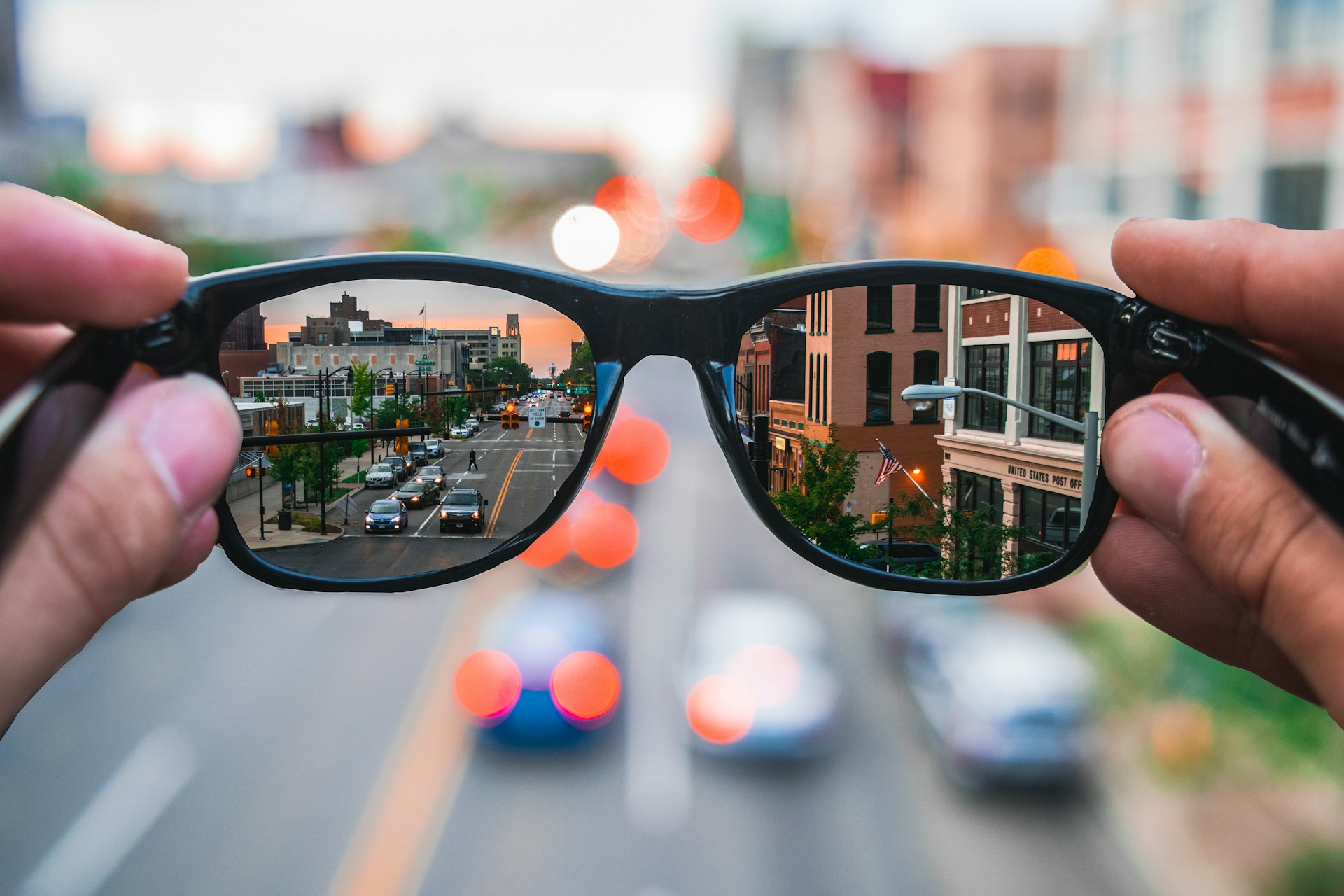
There is a particular kind of denial that surrounds vision problems in adults. Unlike other health changes that announce themselves with clear symptoms, deteriorating distance vision tends to creep in gradually enough that most people adapt without fully acknowledging what is happening. You sit slightly closer to the television than you used to. You lean forward at traffic lights to read signs a second earlier than feels comfortable. You find yourself choosing seats closer to the screen at the cinema. None of these feel like symptoms. They feel like preferences.
The problem with that kind of gradual adaptation is that it allows uncorrected vision to affect your quality of life and in some cases your safety for considerably longer than necessary. There are specific activities where the difference between corrected and uncorrected distance vision is not simply a matter of comfort. It genuinely changes how well you perform and in certain contexts how safe you and the people around you are.
Driving, watching films and participating in sport are three of the most common areas where this plays out most clearly. Understanding why each of these demands good distance vision, and what optical support actually changes about the experience, is worth spending some time on.
The Visual Demands of Driving
Driving is probably the activity where uncorrected myopia carries the most serious consequences. The task places constant and varied demands on your distance vision. Reading road signs at speed. Identifying hazards before they become critical. Judging the distance and speed of other vehicles. Monitoring what is happening in your mirrors while simultaneously processing what is ahead. All of this happens continuously and at a pace that leaves very little room for the additional processing time that blurred vision creates.
In the United Kingdom, the legal standard for driving vision requires that you can read a number plate from twenty metres in good daylight. That is not a particularly demanding standard, and many people with moderate myopia can meet it. But meeting the legal minimum and having vision that is genuinely optimised for the demands of driving are two different things.
Distance glasses make a measurable difference to driving performance beyond simply meeting the legal threshold. Clear, sharp vision of road signs, lane markings and potential hazards at distance gives your brain more processing time and more accurate information than blurred or borderline vision does. In wet conditions, at night or on unfamiliar roads where you have less predictive knowledge to compensate for visual uncertainty, that additional clarity becomes considerably more valuable.
Night driving is worth singling out specifically. The pupil dilates in low light to allow more light into the eye, which slightly changes the optics of vision and can make the effects of uncorrected myopia more pronounced. Halos around streetlights, difficulty judging distance from oncoming headlights and reduced contrast sensitivity at night are all experiences that people with mild myopia sometimes notice after dark even when their daytime vision feels manageable without glasses.
If you drive regularly and have not had your eyes tested recently, this is one of the more compelling practical reasons to do so. The difference that a current, accurate prescription in your distance glasses makes to the driving experience is often more noticeable than people expect, particularly if their prescription has been gradually shifting without being updated.
Cinema and the Viewing Distance Problem
The cinema experience is designed around a specific relationship between screen size and viewing distance. The immersive quality that makes a good film genuinely cinematic depends on the image filling a meaningful portion of your visual field, which only works properly if the image is sharp enough to resolve detail at that distance.
For someone with uncorrected myopia, the cinema experience is a compromise. Edges are softer than they should be. Subtitles require additional effort. Fast-moving sequences lose some of their visual clarity. The emotional impact of a carefully composed shot is diminished when the image is not quite sharp. None of this is dramatic. It is the kind of low-level disappointment that most myopic people have simply accepted as part of how cinema feels for them.
Wearing distance glasses at the cinema recovers the experience as it was intended. Subtitles become effortless rather than effortful. Detail in wide landscape shots resolves properly. The full visual impact of a well-made film lands as the director intended rather than through the softening filter of uncorrected myopia.
This sounds like a minor point but it is worth taking seriously. We spend money, time and attention on experiences like cinema precisely because of the quality of the experience they offer. Accessing that quality fully costs nothing beyond wearing the glasses that correct the vision you already know needs correcting.
Sport and the Reaction Time Equation
The relationship between vision and sporting performance is well-established and often underestimated by recreational participants who assume that elite-level visual demands do not apply to them. In reality, most sports place demands on distance vision that affect participants at every level, not just professionals.
Ball sports are the most obvious example. Cricket, tennis, football, squash and golf all require the ability to track a moving object at distance with sufficient accuracy to anticipate its trajectory and respond in time. The time available to make that response is determined partly by reaction speed and partly by how early and accurately you can identify what the object is doing. Poor distance vision reduces the effective window in which you have clear enough information to act, which translates directly into slower and less accurate responses regardless of how good your physical reaction speed actually is.
Distance glasses address this by restoring the clarity at which you perceive moving objects in your visual field. The reaction time itself does not change, but the quality and earliness of the visual information you are working with does. In practical terms that means more time to position yourself, more accurate anticipation of ball trajectory and better spatial awareness of where other players and obstacles are.
Sports glasses take this a step further by addressing the additional environmental demands that sport creates beyond simply correcting distance vision. Standard prescription frames, including regular distance glasses, are not always suitable for active use. They can slip during intense movement, lack the impact resistance needed for contact or high-speed sports and provide insufficient coverage against wind, dust and peripheral light.
Sports glasses are purpose-built to stay securely on the face during vigorous movement, typically through rubberised grip points on the nose bridge and temples. They use impact-resistant lens materials, usually polycarbonate, that meet safety standards relevant to contact sports and high-velocity ball sports. Many designs include wraparound coverage that improves peripheral vision while blocking environmental irritants from the sides.
For anyone who plays sport regularly and wears a distance prescription, the question of whether to use regular distance glasses or dedicated sports glasses is largely settled by the type of sport involved. Low-impact activities like golf or bowls can often be managed comfortably in regular frames. Higher-impact or faster-moving sports benefit meaningfully from purpose-built sports glasses with prescription lenses, both in terms of performance and in terms of the safety of the wearer and those around them.
Contact Lenses as an Alternative for Sport
It would be incomplete to discuss optical support in sport without acknowledging that contact lenses remain the preferred solution for many active people. They offer an unrestricted field of vision without the frame boundary that even well-designed sports glasses carry. They do not fog, do not have temple pieces that create pressure points under a helmet and do not shift on the face during rapid movement.
The practical limitations are equally real. Contact lenses require careful hygiene management, carry infection risk if handled incorrectly and can become uncomfortable during prolonged exertion, particularly in windy or dusty outdoor environments. For water sports, standard contact lenses carry risks associated with waterborne microorganisms that make dedicated watertight goggles with prescription inserts a safer choice.
Many people who are active across multiple sports find that a combination approach works best. Contact lenses for activities where the unrestricted field of vision and absence of a frame matters most, and sports glasses for situations where impact risk or environmental protection makes a physical lens covering preferable.
Knowing When to Act
The common thread across driving, cinema and sport is that uncorrected distance vision creates a version of each experience that is slightly degraded without ever announcing itself clearly as the reason. People adapt, compensate and accept the diminished version as normal. The decision to get their vision properly assessed and corrected, whether through distance glasses, sports glasses or contact lenses, tends to produce a reaction of genuine surprise at how much better the corrected experience feels compared with what they had quietly accepted.
If any of the experiences described in this piece feel familiar, that recognition is probably worth acting on. An eye test is not a significant commitment of time or money. What it potentially recovers in quality of experience across activities you already care about is considerably more valuable than most people anticipate before they go.
Final Thoughts
Vision correction is not purely a medical matter. It is a quality of life matter. The activities that benefit most from clear distance vision, driving safely, experiencing cinema as it was designed and performing in sport to the level your physical ability actually allows, are activities most people care about and invest in regularly.
Distance glasses and sports glasses are the tools that allow those experiences to be fully accessed rather than partially compromised. The case for using them properly and keeping prescriptions current is not complicated. It simply requires acknowledging that the gradual adaptation most people make to declining distance vision is not the same thing as the problem not being there.