







Why Do Devon's Rural Workplaces Need First Aid Skills?
Devon's economy runs on farms, holiday parks, harbours and small firms spread across deep countryside. When someone is hurt at work here, the nearest ambulance can be a long way off. The first few minutes usually belong to whoever is standing nearby.
That waiting time is why more employers now book on-site first aid training delivered at your own premises instead of sending staff to a distant centre. Whole teams learn together, in the same rooms, yards and kitchens where an accident would actually happen.
Why Is Emergency Response Slower In Rural Devon?
Distance is the simple answer. Ambulance crews serving Dartmoor, the moorland fringes and the coastal villages have far more ground to cover than crews based in Exeter or Plymouth. A casualty on a remote farm track waits longer than one on a city street, however hard the service works.
Local communities already recognise the problem. When Kingswear residents raised £600 towards a community defibrillator at a charity supper, organisers pointed to stark figures. Survival from cardiac arrest sits near 5% with CPR alone, yet rises to about 50% when a defibrillator is used quickly.
Workplaces face the same arithmetic. Until a paramedic arrives, a trained colleague is the only medical help a casualty has. Whether that colleague knows what to do is a decision each employer makes long before the accident.
What Does the Law Expect From Devon Employers?
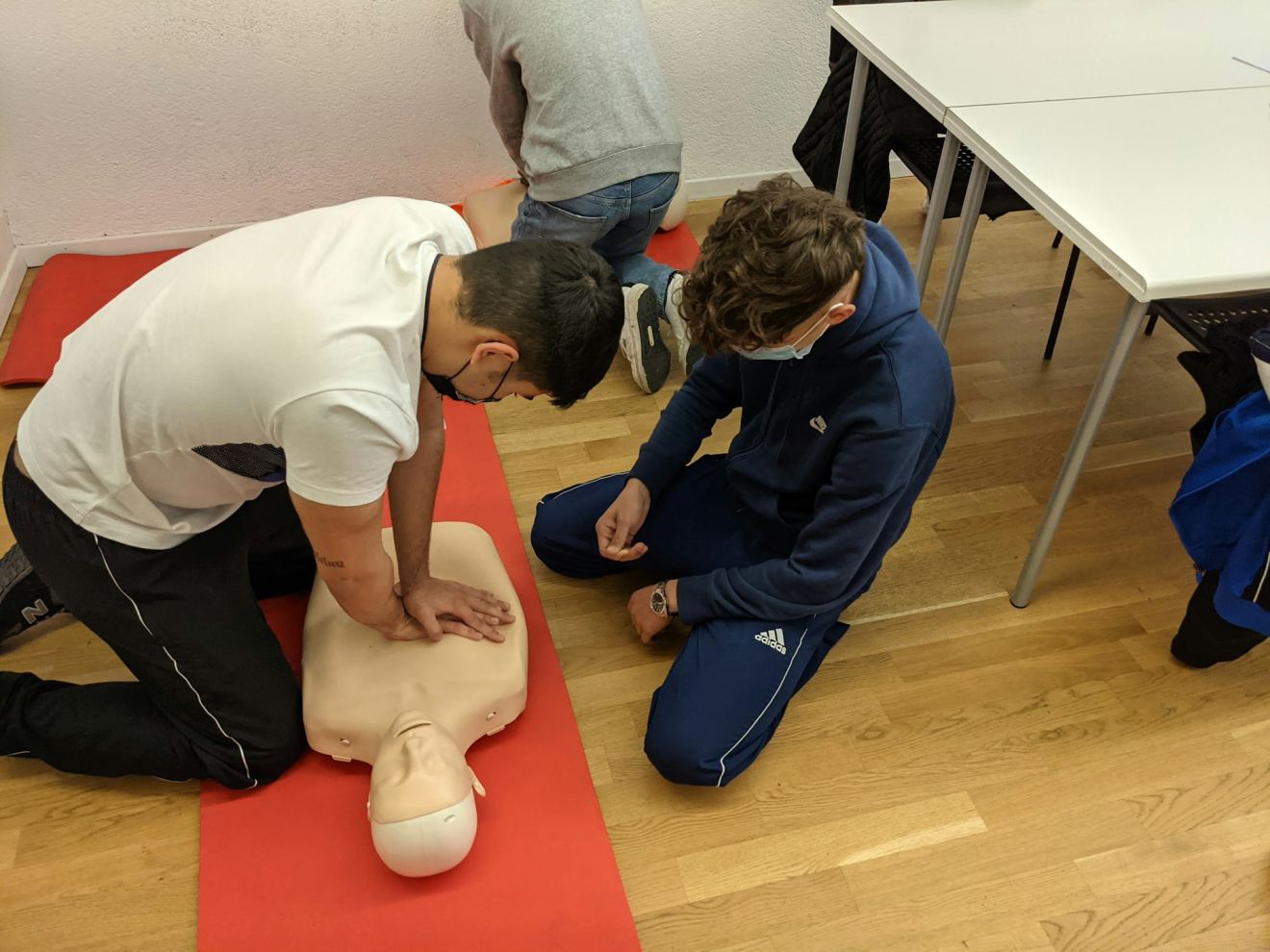
The Health and Safety (First Aid) Regulations 1981 apply to every business in the county, from a Totnes cafe to a Barnstaple building firm. The duty breaks down into 5 practical steps.
- Assess your needs. The HSE's needs assessment guidance asks employers to weigh workplace hazards, staff numbers and distance from emergency care. Remote locations push the required provision up, not down.
- Appoint trained people. A low-hazard office of 25 to 50 staff needs at least 1 qualified first aider. Higher-hazard sites such as farms and building yards should plan for 1 per 50 workers.
- Stock the right kit. Contents should match the risks the assessment found, not just a standard box. A busy kitchen needs burn dressings, while a workshop needs eye pads and larger wound dressings.
- Tell your staff. Everyone on site should know who the first aiders are and where the kit lives. Induction briefings and simple notices do the job.
- Review it regularly. New equipment, new premises or a seasonal staffing surge should trigger a fresh look. Many Devon tourism businesses double their headcount each summer.
How Does Training On Your Own Site Change Things?
Training at the workplace itself removes the two biggest barriers for rural employers: travel and relevance. Nobody drives anywhere, and every scenario is rehearsed where it would really unfold.
A farm near Holsworthy or a hotel on the South Hams coast can sit more than an hour from the nearest training centre. Sending 6 staff away for the day means lost shifts, mileage claims and cover costs. Bringing the trainer to the workplace removes all three at once.
Practice also lands differently on familiar ground. Staff rehearse CPR in their own tearoom and manage a mock injury beside their own machinery. When the real thing happens, the room, the kit and the exit routes are already known.
Which Devon Workplaces Carry the Highest Risk?
Farms, kitchens and outdoor venues top the list. Weather alone can turn a trading day into an emergency. The Devon County Show saw this when rain scrapped its third day and forced 25% refunds on stand fees.
- Farms and agricultural contractors. Machinery, livestock and lone working combine with long distances from help.
- Tourism and hospitality. Busy kitchens, pools and guest activities produce burns, cuts and falls, mostly in peak season.
- Fishing and food processing. Harbour-side work brings winches, blades and cold water together.
- Construction and trades. Work at height and power tools cause many of the county's serious injuries.
- Outdoor activity providers. Moorland and coastal sites are often far from any road an ambulance can reach.
Each of these settings gains the most from trained people already on the spot.
How Often Should First Aid Skills Be Refreshed?
Certificates last 3 years, and the HSE recommends an annual refresher on top. Skills fade fast without practice, and CPR technique suffers most of all.
Course choice matters too. The 1-day Emergency First Aid at Work course suits most small, low-risk teams. Higher-risk sites usually need the 3-day First Aid at Work qualification instead.
Between formal courses, staff can keep knowledge warm at no cost. The NHS publishes free first aid advice for anyone wanting to refresh the basics at home. Ten minutes of reading each month keeps skills fresh.
The Short Version for Devon Employers
- The Health and Safety (First Aid) Regulations 1981 apply to every Devon business, whatever its size.
- A needs assessment comes first, and it must account for distance from emergency care.
- A low-hazard team of 25 to 50 staff needs at least 1 qualified first aider.
- Training at your own premises cuts travel costs and matches practice to real risks.
- Certificates expire after 3 years, and the HSE recommends annual refreshers between renewals.
- Rapid defibrillation can lift cardiac arrest survival from about 5% to 50%.
Ready Before the Ambulance Arrives
Nobody plans the accident, but every Devon employer can plan the response. A trained team, a stocked kit and a current assessment turn a long wait for help into useful minutes. That preparation costs a day of training and repays it when it matters most.
FAQ
What Is the Difference Between EFAW and FAW?
Emergency First Aid at Work (EFAW) is a 1-day course covering life-threatening emergencies. First Aid at Work (FAW) runs for 3 days and adds injuries such as fractures, burns and eye wounds. Your needs assessment decides which one your workplace requires.
How Many First Aiders Does a Small Business Need?
A low-hazard workplace with fewer than 25 staff may only need an appointed person to manage arrangements. The HSE still recommends at least 1 trained first aider on every site as good practice.
Do Seasonal Staff Count In a Needs Assessment?
Yes. Provision must cover the people actually on site, so a holiday park that doubles its headcount each summer needs extra trained staff for that period. Shift patterns and holiday cover count as well.
Does Workplace First Aid Training Cover Defibrillator Use?
Yes. Both EFAW and FAW courses include CPR and automated external defibrillator (AED) practice as standard. Staff also learn where to find the nearest public device to their site.