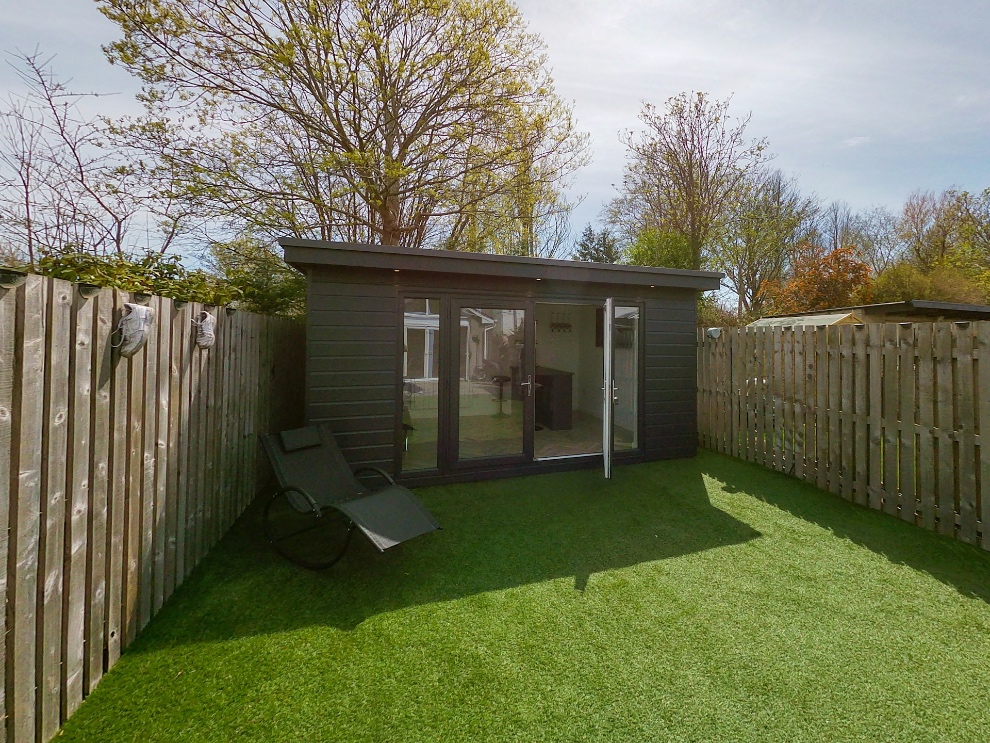






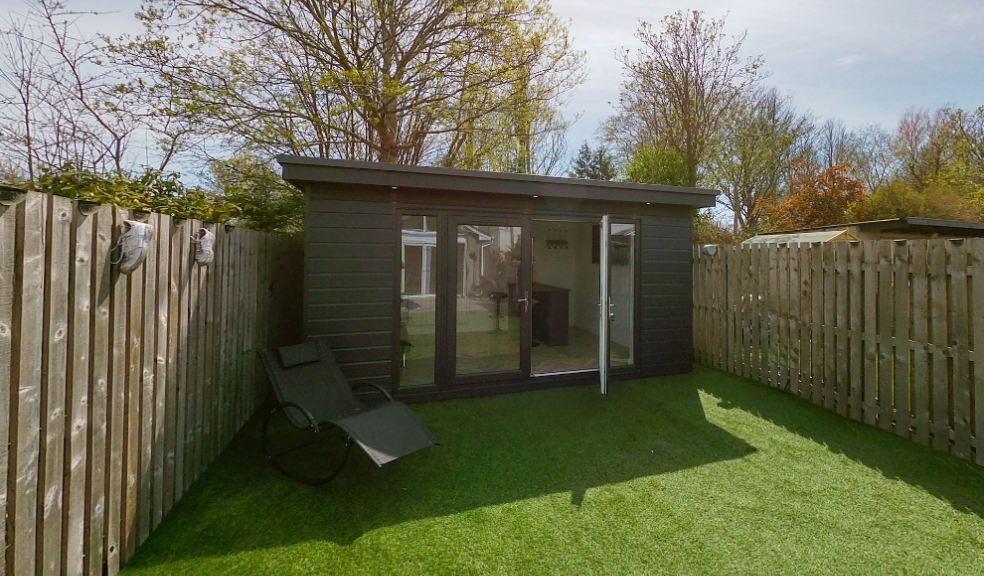
Why So Many Homeowners Are Adding a Garden Room Instead of Moving House
The maths of moving house in the UK has quietly stopped working for a lot of people.
Stamp duty, estate agent fees, conveyancing, removal costs, and the difference in mortgage rates between a deal you locked in three years ago and what's on offer now. Add it all up and the cost of swapping a three-bedroom house for a four-bedroom one can easily run into five figures before you've paid a penny towards the actual upgrade.
Meanwhile, the need for more space has not gone away. Hybrid working is normal. Kids are older and need somewhere of their own. Someone wants a home gym, or a studio, or a quiet place to read that isn't the edge of the bed.
So more people are looking at what they've already got and asking whether they can make it work harder.
A garden room is the most common answer.
Not a Shed. Not a Summer House. An Actual Room.
The phrase "garden room" covers a lot of ground, and the quality varies enormously.
At the cheap end, you have glorified sheds. Single-skin timber, minimal insulation, a radiator plugged into a socket. Usable in July and maybe September, painful from November to March. These are not what people mean when they talk about garden rooms as a serious home extension.
At the proper end, you have fully insulated, weather-tight, wired-in structures with underfloor heating, proper windows, and a foundation that will be standing in 30 years. They look like a small building, because that is what they are. The best ones are designed alongside the rest of the garden so they do not look dropped from a helicopter.
The gap between these two categories is significant. A £6,000 kit from a big-box retailer is not comparable to a £35,000 built-on-site structure, and nobody should pretend otherwise. Different products, different lifespans, different outcomes.
The Real Appeal: A Room You Walk To
A garden room is a room with 15 metres between it and the rest of the house. That distance is the whole point.
If you work from home, a garden office is not just extra square footage. It is separation. You close the door on the kitchen and the washing machine and the reminder that the boiler is playing up. You are at work. Then you walk back across the garden at the end of the day and you are home.
The same logic applies to a garden gym. Home gyms inside the house tend to get cluttered, noisy, and abandoned. A purpose-built gym across the garden is somewhere you actually go. The change of location does most of the psychological work.
For teenagers, a garden room becomes the equivalent of the old attic conversion but without the awkward ceiling. Somewhere to have friends over without turning the whole house into a noise zone.
None of these uses require moving house. None of them require a loft conversion either, which is the other common answer and tends to cost more than people expect.
The Planning Question
This is where most people get confused, and where cutting corners gets expensive.
Many garden rooms in England fall under what is called permitted development, which means you can build them without a full planning application. But "many" is not "all," and the rules have specific thresholds that matter.
As a general guide, a garden room is likely to fall under permitted development if it is single-storey, sits no higher than 2.5 metres at the eaves for buildings within two metres of a boundary, does not exceed 4 metres overall height with a dual-pitch roof (or 3 metres with any other roof type), covers less than 50% of the garden, and is not used as sleeping accommodation. Listed buildings, conservation areas, and National Park sites follow tighter rules and often need a full application.
The government's own guidance through the Planning Portal is the starting point for understanding what applies to your specific site. It is worth reading before you commit to a design, not after.
Scottish homeowners face a slightly different picture. Rules are broadly similar in principle, but building warrants are a separate approval from planning permission and may apply to enclosed structures over certain dimensions. The Scottish government's planning guidance sets out how the two systems interact.
Glasgow-based landscapers MacColl & Stokes Landscaping have written a useful breakdown of how to approach planning permission for a garden room, covering both the permitted development thresholds and the building warrant question that trips up Scottish homeowners in particular. For anyone considering a build rather than a kit, understanding these rules before the design is finalised saves money and stress.
The Costs That Actually Matter
Headline prices for garden rooms are misleading because they often exclude the expensive parts.
The structure itself is one figure. The foundations, the groundworks, the electrical supply, the path from the house, the insulation specification, the glazing quality, any planning or warrant applications, delivery and installation, and the landscaping around the finished building are all separate.
A kit advertised at £8,000 often becomes £15,000 once you add proper foundations, a real electrical connection rather than an extension lead from the house, and someone to assemble it to a decent standard. That is still reasonable value if the end result is solid, but the £8,000 figure was never the full picture.
Properly built, on-site garden rooms in the 15 to 25 square metre range tend to land somewhere between £25,000 and £50,000, depending on specification and location. That is a wide range because specification varies hugely. An uninsulated kit at one end, a fully insulated building with triple glazing and underfloor heating at the other.
The point is to compare like with like. A cheap quote that uses different materials and methods is not a competitor to a thorough quote. It is a different product.
What You Save By Not Moving
It is worth running the numbers properly, because the case for a garden room often comes down to this comparison.
Moving from a three-bedroom semi to a four-bedroom semi in the same area, roughly, costs the following. Stamp duty on the new purchase, which depends on price but can easily hit £5,000 to £15,000. Estate agent fees on the sale, typically 1 to 1.5% of the sale price. Legal fees on both sides, probably £2,000 to £3,000 combined. Removal costs, usually £1,000 to £2,500 depending on distance. Higher monthly mortgage payments if rates have risen since you last fixed, potentially £100 to £400 per month.
Total transaction cost, before any upgrade in the house itself, often lands between £12,000 and £25,000. Plus the ongoing mortgage increase.
A £30,000 garden room, by contrast, adds real usable space and often increases the value of the property by a decent share of what it cost. The research from estate agents tends to suggest well-built garden rooms add between 5% and 15% to property value, though this depends entirely on build quality and whether it looks like a proper extension of the house or an afterthought.
Run the maths on your own situation. For many homeowners, particularly those who locked in low mortgage rates in 2020 or 2021, the numbers favour staying put and building.
Where People Go Wrong
A few mistakes show up again and again.
Putting it in the wrong spot. The shadiest corner of the garden is not where you want to sit all winter. Neither is the spot closest to a busy road. Think about sun, privacy, access, and the view from the garden room back towards the house.
Skipping insulation. A poorly insulated garden room is usable for about four months. A well-insulated one is usable for twelve. The insulation spec is the single most important thing to get right, and it is invisible once the walls are up. Cutting corners here is a decision you regret every January.
Treating the path as an afterthought. If walking to the garden room in November means picking your way across a soggy lawn, you stop going. A paved or decked path, properly drained, is not optional.
Forgetting about the power supply. A proper garden office needs a proper electrical connection, not an extension lead. Running an armoured cable from the house consumer unit is a job for an electrician and needs to be accounted for in the budget.
Over-glazing. Floor-to-ceiling windows look great in photos. They also overheat in summer and lose heat in winter, and they reduce the wall space you have for useful things like bookshelves or a desk. Some glazing is good. All glazing is usually a mistake.
Is It Right For Your Situation?
Garden rooms are not universal. They work best when a few things are true.
You have enough garden left over after the build. A garden room that eats the garden creates a different problem than the one it solves.
You plan to stay in the house for at least the next five to ten years. The full value of the investment, both financial and practical, comes from using it over time.
Your planned use requires or benefits from separation. A home office used every day makes more sense than one used occasionally. A gym for someone who trains five times a week makes more sense than an impulse purchase.
You are willing to spend enough to do it properly. A cheap garden room is almost always a false economy. Better to do it well or not do it at all.
The Bigger Picture
The shift towards adapting existing homes rather than moving is not a trend. It is a response to the maths of the current UK housing market. Stamp duty reform, mortgage rates, and the cost of moving are structural issues that make extending or reconfiguring more attractive than trading up.
Garden rooms are one answer. Loft conversions, side returns, and proper rear extensions are others. Each has its case depending on the layout of your home and what you actually need.
What is clear is that more homeowners are looking hard at what they have before they put the house on the market.
For a lot of them, a well-built room at the bottom of the garden turns out to be what they were really looking for all along.