





Training people for real life in Torbay: University Centre South Devon launches new foundation degree
Drive through Torbay on the wrong day and you’ll see it. A man sleeping rough in a doorway, a young woman waiting outside a food bank that won’t open for another hour and children who’ve grown up knowing which houses to avoid on their street.
These are some of the reasons why University Centre South Devon has spent the past year designing a new foundation degree that will train more people to help these communities and individuals.
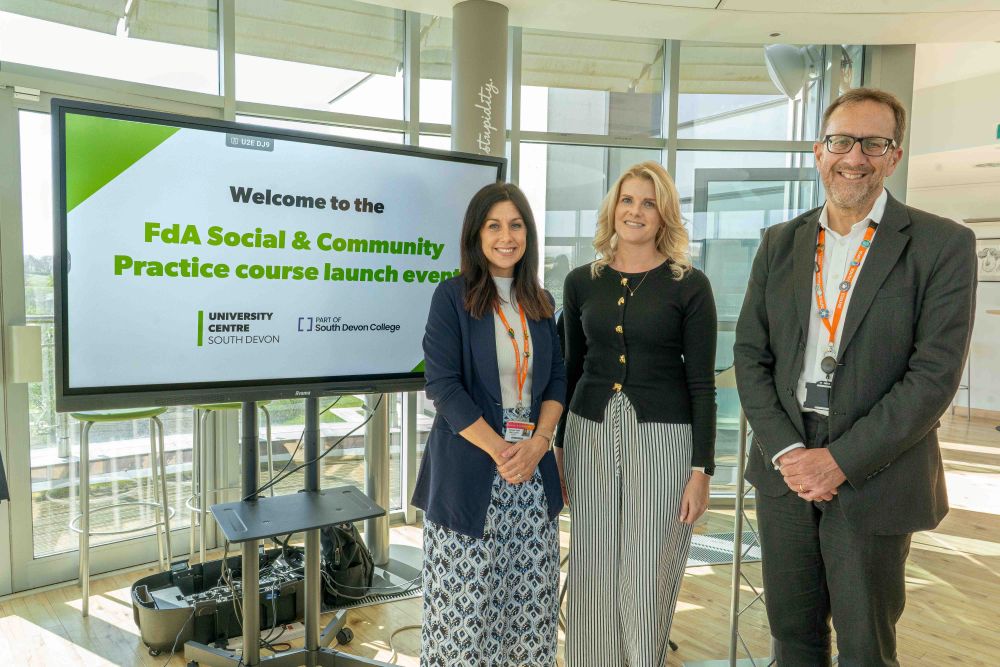
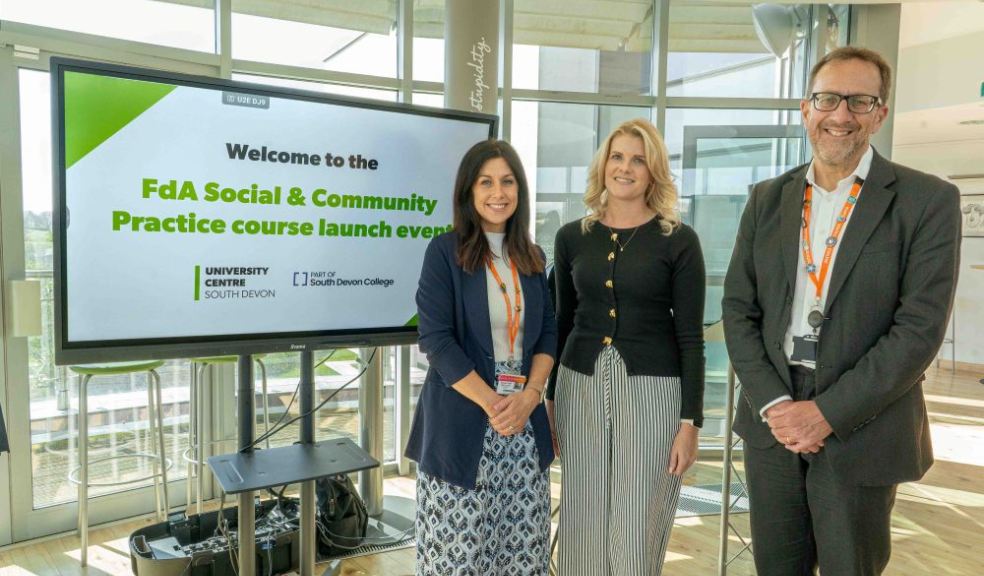
The FdA Social and Community Practice Foundation Degree was officially launched recently after receiving approval in March 2026, though the thinking behind it has been growing momentum for much longer.
It replaces an earlier programme focused on children, young people and families, and the shift in scope is entirely deliberate. The problems facing Torbay cannot be neatly contained to one demographic.
Torbay is listed 48th out of 317 local authorities on the national Index of Multiple Deprivation, in England. More than a quarter of residents live in areas classed among the country’s 20% most deprived.
A survey by Healthwatch Torbay a few years ago asked over 1,900 young people what they found hardest about living in the area.
Drug use, homelessness, crime and gang activity came up again and again.
“These aren’t vague local concerns,” explains Hannah Davies, Head of Faculty: Social Science, Counselling & Childhood Studies. “This is reality, things people bump into on the way to school. “
The national picture adds further weight. A Department for Education report from 2023 to 2024 raised the risk level for social worker shortages in local authorities from moderate to critical.
“There simply aren’t enough trained people to do the work that communities need done,” continued Hannah.
“Torbay Council recognised this at grass roots level and approached University Centre South Devon to ask whether something could be built to help their community care workers step into lead practitioner roles. The degree, in many ways, grew out of that conversation.”
Tracey Cabache, Director of Torbay Communities explained that community organisations across Torbay are dealing with increasingly complex challenges, from mental health and debt to housing and isolation.
“What makes the biggest difference is having confident, skilled professionals who can really listen, understand people’s situations and work alongside them to find solutions. Courses like this are really important because they give people the knowledge and confidence to support individuals in the best way possible and respond to what communities actually need.”
The programme runs across two years. The first year introduces students to the foundations of social work: legislation, ethics, professional values and the kind of developmental theory that helps make sense of what you’re seeing when you walk into a difficult home situation.
It’s mapped to Social Work England’s Professional Capabilities Framework, which means students who complete Level 4 can apply to join the second year of the BA Social Work - that progression route is built in.
The second year takes a harder look at the specific pressures of this region.
Addiction, homelessness and poverty, mental health, disability, the criminal justice system and what happens to people who pass through it.
These modules can also be studied as standalone Continuing Professional Development units, so that people already working in the sector can deepen their knowledge without committing to a full degree.
“This is more than a course; it’s a response to real community need, shaped by employers, policy, and local voices, equipping both experienced practitioners and our future workforce with the knowledge, skills, and ethical foundation to make a tangible difference,” explained Hannah.
“And what makes it work in practice is that the curriculum was shaped by talking to the people who’ll use it. Employers from charities, education and community organisations gave feedback that fed directly into the design of the course.”
Students on Access courses described the barriers they’d hit trying to access university-level study from Torbay. Distance, cost, caring responsibilities. The degree is built to meet people where they are, not to expect them to rearrange their lives to reach it.
There’s also an application in progress to have the qualification recognised as a Higher Technical Qualification, tied to the Early Intervention Practitioner standard, which would open up funding routes through the Lifelong Learning Entitlement.
Graduates will be trained to take on roles including family practitioner, lead practitioner, safeguarding officer, housing officer and mental health support worker, among others.
“These jobs titles may sound understated, but they describe people who sit with families in crisis, who follow up when a teenager stops showing up to school, who notice when something has gone wrong before it becomes catastrophic,” said Hannah
“Torbay has more need for that kind of work than it has people to do it. This degree is one attempt to close that gap.”