





Report: Vapers Now Outnumber Smokers in UK
According to a BBC report published in November 2025, there are now more vapers than smokers in Britain.
The report cites a survey conducted in 2024 by the Office of National Statistics. The survey’s results suggest that there now about 5.4 million vapers in the United Kingdom, while 4.9 million are smokers.
Smoking is the world’s leading preventable cause of death, with an estimate linking 70,000 deaths to smoking per year in the United Kingdom alone. According to the NHS, vaping is significantly less risky to health and is one of the most effective ways to quit smoking.
A History of Common-Sense Regulation
“Vaping is one of the greatest modern success stories in public health,” said Marius Adomaitis, owner of online vape shop Vaporia. “We owe that success to common-sense regulations that ensure the safety and availability of products that adult nicotine users find satisfying and enjoyable.”
The NHS has long recommended switching to vaping as a valid method of smoking cessation, and government regulations have helped to keep a wide variety of product types and flavours available while minimising risks to health and the environment.
- All legal vaping products in the UK undergo testing to ensure that harmful emissions are kept within tolerable levels.
- Flavouring ingredients known to be dangerous – such as diacetyl – are banned.
- E-liquid bottles and vape tanks/pods are limited to capacities of 10 and 2 ml respectively to prevent accidental nicotine poisonings.
- Nicotine strengths of vaping products are limited to a maximum of 20 mg/ml, preventing accidental nicotine overdose while also ensuring a satisfying experience for adult smokers.
- Single-use disposable vapes were banned in the UK in 2025 to limit the potential environmental harms of discarded batteries. The product category was replaced with new “big puff vapes,” which are reusable and equally convenient.
How Vaping Helps Smokers Quit
Vaping has been successful in helping to eliminate smoking in the UK because it’s the only form of alternative nicotine use that mimics the movements and rituals of smoking. It’s also the only type of alternative nicotine product that provides the quick absorption of inhalation, making it more satisfying than other types of nicotine replacement products such as gums and patches.
A vaping device includes a tank, pod or cartridge filled with a liquid called e-liquid. Although e-liquid usually contains nicotine, nicotine-free e-liquid is also available. When the device is activated, it heats the e-liquid and turns it to vapour. The vapour is inhaled and exhaled like cigarette smoke, allowing the user to absorb the nicotine through his or her lungs.
One of the reasons why vaping has been so successful in helping smokers quit is because e-liquid is available in a wide variety of different flavours. Because tobacco isn’t used as a flavouring ingredient, the vapour doesn’t taste like cigarette smoke. Many vapers see that as a benefit, though, because vaping also lacks the unpleasant smell and inherent harshness of smoking. Popular flavour choices include fruit, candy, dessert and mint.
Combating Potential Environmental Harms
In 2025, the UK banned the sale of single-use disposable vapes out of concern for the harm caused by the improper disposal of lithium-ion batteries. Disposable vapes are self-contained vaping devices that are pre-filled with e-liquid and ready to use as soon as they’re purchased. People loved disposable vapes prior to the ban for their convenience and ease of use, but they had a strong potential to cause environmental harm because most empty vapes ended up in landfills rather than being recycled.
Vape devices contain lithium, which is a scarce resource and a potential groundwater contaminant. The ban on disposable vapes is another forward-thinking vape regulation for the UK because it minimises landfill waste and ensures that all vaping products sold in this country are reusable and refillable. The expected lifespan of a refillable vaping device is a year or potentially longer, and the ban on disposables will help to minimise the waste caused by discarded vapes.
Future Trends for the UK Vaping Industry
Vaping has been extremely successful in helping UK smokers quit, and the rapidly expanding size of the user base has helped to make this country one of the world’s most important vaping markets. As a result, the UK is a major driver of product trends and will be an even bigger force in the industry in 2026. These are the two trends that will shape the evolution of vaping over the next year.
Big Puff Vapes
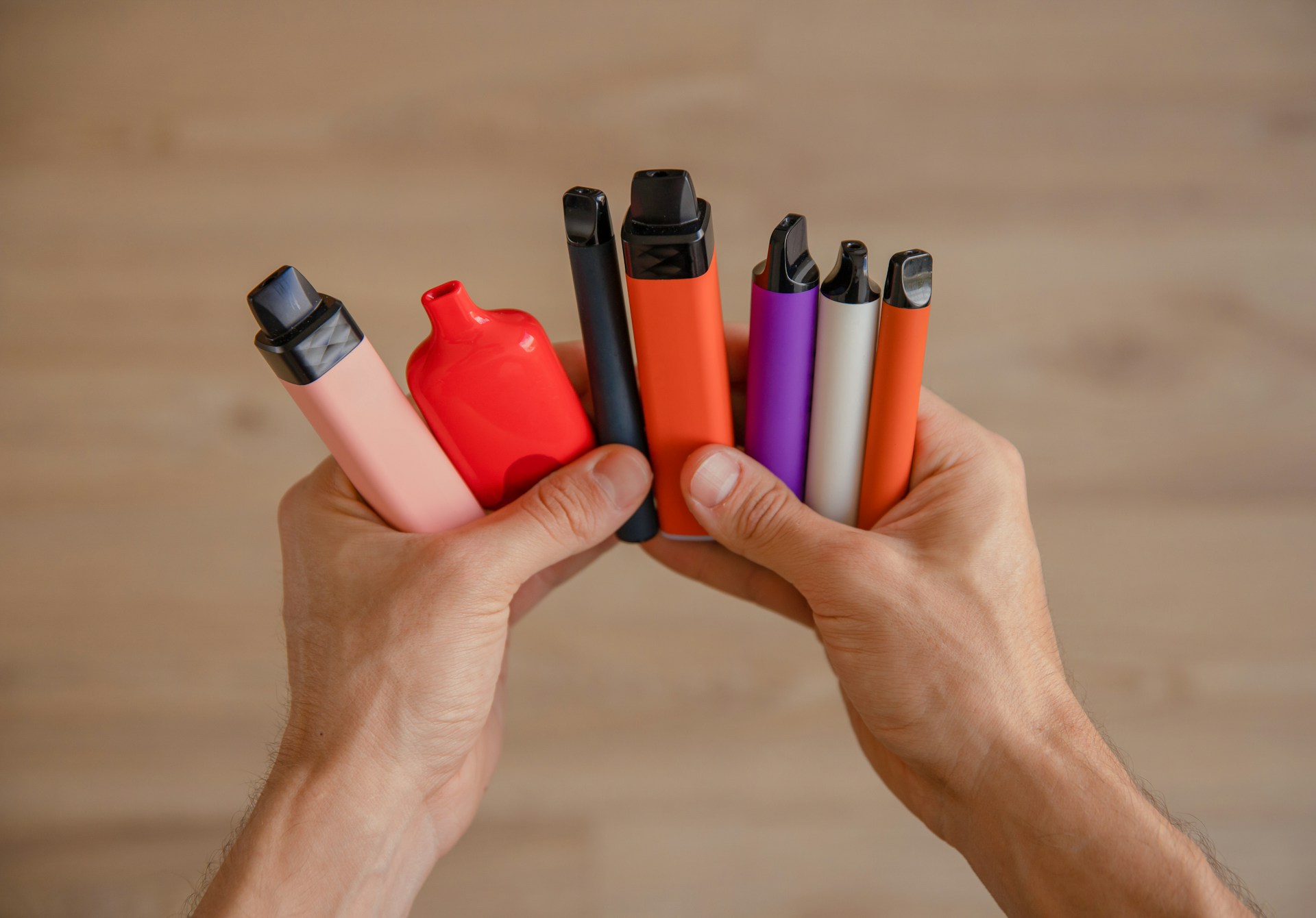
Although disposable vapes are now banned in the UK, they’ve been replaced by a new product category called big puff vapes. Big puff vapes are small and easy to use like disposable vapes, but they’re legal for sale because they’re rechargeable and refillable.
The reason why big puff vapes have the “big puff” name is because they can hold multiple pods or refill containers. Depending on the device’s design, a big puff vape can contain up to 12 ml of e-liquid and deliver thousands of puffs. When it’s empty, refilling the device is as simple as replacing the pods or refill container.
Big puff vapes occupy the same product niche that disposable vapes once filled, and the fact that they can hold so much e-liquid actually makes them better than disposables because they last significantly longer before running out. Big puff vapes are among the most popular types of vapes in Britain today, and this trend will likely persist into 2026.
Demand for Easier Recycling
The ban on disposable vapes helped to make the UK vaping community aware of the dangers of improperly discarded lithium-ion batteries. The fact that most vapes aren’t designed with recycling in mind, however, is a challenge that limits proper disposal.
A few of the vaping industry’s manufacturers have already responded to consumers’ environmental concerns by developing devices with batteries that can be easily removed and dropped off at any collection point. Modular vape batteries are better for the environment since they’re easy for consumers to recycle, and the fact that new batteries can be installed in the devices may also lead to longer-lasting vapes. It’s likely that more new vapes will adopt this feature in 2026.