





How can new motorcyclists stay safe on the roads
You never forget your first rides on a motorcycle. The freedom feels real, but so does the vulnerability. Unlike drivers, you do not have a steel frame around you. You rely on awareness, skill and judgement every time you pull away from the kerb. Many collisions involving motorcycles could be avoided with stronger preparation and sharper observation. Building these safe habits early gives yourself more time to react, more control in difficult moments and more confidence in everyday traffic.
Know the Highway Code and recent rule changes
The Highway Code sets out clear expectations for positioning, filtering and junction behaviour, and you need to understand how these rules apply specifically to motorcycles. Recent updates introduced the Hierarchy of Road Users, which places greater responsibility on those who can cause the most harm. As a motorcyclist, you sit between cars and more vulnerable users such as cyclists and pedestrians.
This means you must stay alert at junctions where drivers may look past you, while also giving space to cyclists who have priority in certain situations. When you understand how the hierarchy works, you can predict how other road users should behave and spot when they are likely to get it wrong.
Get proper training and keep improving your skills
Compulsory Basic Training gives you the legal foundation to ride, but it does not make you an expert. You develop real confidence when you continue learning after your test. Post-test and advanced riding courses teach you how to corner smoothly, manage speed safely and position yourself for maximum visibility.
Ongoing training sharpens your hazard perception. For example, an instructor may show you how a slight change in road position at a roundabout increases the chance that a driver sees you in their mirrors. Book an advanced session within your first year of riding to build these habits before complacency sets in.
Anticipate hazards and ride for the conditions
Safe riding depends on reading the road ahead. You need to scan beyond the car in front and assess side roads, pedestrian crossings and changing surfaces. Wet leaves, diesel spills and loose gravel on rural lanes can all reduce grip quickly.
Adjust your speed and following distance when visibility drops or traffic thickens. A defensive mindset does not mean riding in fear; it means assuming that other road users may not see you and positioning yourself accordingly. If the worst happens despite your precautions, knowing your rights around submitting a motorcycle claim can help you focus on recovery rather than financial strain.
Wear the right protective gear on every ride
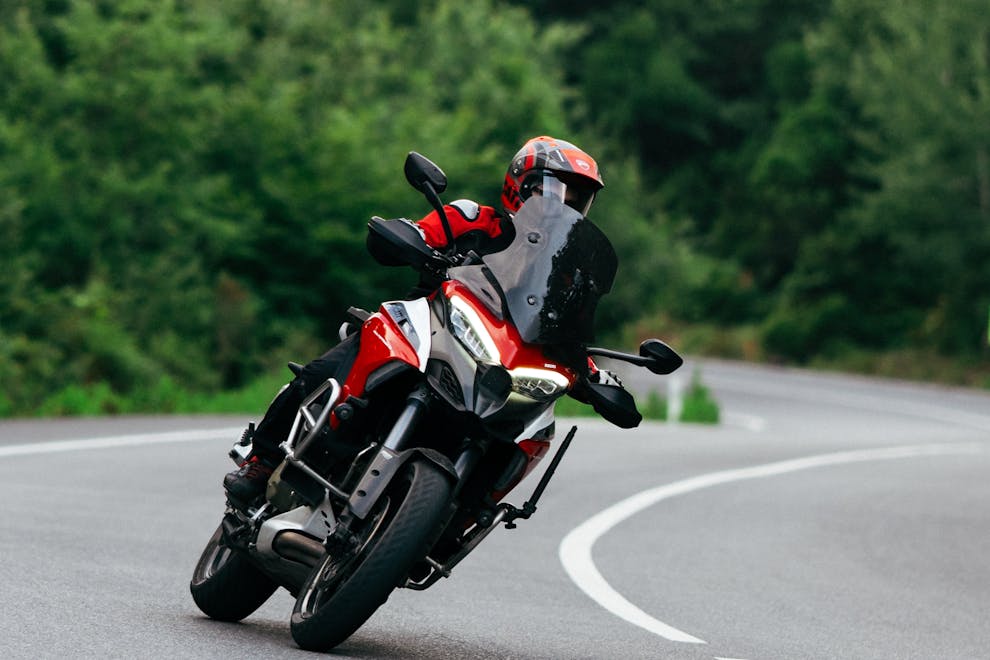
Your gear acts as your final line of defence. A properly fitted, safety-rated helmet reduces the risk of serious head injury, while abrasion-resistant jackets and trousers protect your skin if you slide on tarmac. Gloves improve grip and shield your hands, and sturdy boots support your ankles during impact.
Choose equipment that fits securely and meets recognised safety standards, even for short journeys to the shops. Quality gear cannot prevent every injury, but it can significantly reduce the severity of harm and speed up your return to normal life.