





Smart Gardens: The Evolution of Irrigation from Manual to Automated Systems
For centuries, gardeners relied on simple tools and manual labor to keep plants healthy. Carrying watering cans, dragging hoses across the yard, and estimating how much water plants needed were once the standard routines of garden care. While these traditional methods supported plant growth, they often required considerable time and effort and sometimes resulted in inconsistent watering.
Today, technology is transforming the way you care for plants. A smart irrigation system allows you to automate watering schedules and monitor garden conditions with greater precision. By combining sensors, automation, and data-driven controls, modern irrigation systems make it easier to maintain healthy gardens while using water more responsibly.
The Early Days of Garden Irrigation
Long before modern irrigation systems existed, gardeners relied on simple tools and natural water sources. Early irrigation methods were straightforward but required consistent effort.
Common Traditional Watering Methods
Some of the most common early irrigation practices included:
- Watering cans used for small gardens and household plants
- Buckets and manual transport of water from nearby sources
- Basic hose watering connected directly to outdoor taps
- Gravity-fed channels used in larger agricultural gardens
These methods were practical for small spaces but became inefficient as gardens expanded. Manual watering also depended heavily on the gardener’s schedule, which meant plants sometimes received too much or too little water.
Limitations of Manual Irrigation
Although these methods worked for generations, they had several drawbacks:
- Time-consuming routines that required daily attention
- Uneven water distribution, leading to plant stress
- Water waste due to overwatering or runoff
- Limited scalability for larger gardens or landscapes
As urban gardening and landscaping grew more popular, the need for better irrigation solutions became clear.
The Rise of Mechanical and Timed Irrigation
The next stage in irrigation development introduced mechanical systems designed to reduce manual labor. Gardeners began using sprinkler systems, drip irrigation lines, and timer-based watering devices.
Sprinkler Systems
Sprinklers became a widely used solution for residential lawns and gardens. They distribute water over a wide area using pressurized spray patterns.
Benefits include:
- Coverage for large garden spaces
- Reduced need for hand watering
- Relatively simple installation
However, sprinklers can still waste water if used incorrectly or during unsuitable weather conditions.
Drip Irrigation
Drip irrigation represented a major improvement in water efficiency. Instead of spraying water across an entire garden, drip systems deliver water directly to the base of plants through small tubes.
Advantages include:
- Targeted watering for plant roots
- Reduced evaporation
- Improved water conservation
While effective, traditional drip systems still rely on manual scheduling and monitoring.
The Emergence of the Smart Irrigation System
Technological innovation has led to the development of the smart irrigation system, which combines automation, sensors, and digital connectivity to improve watering accuracy.
How Smart Irrigation Works
A smart irrigation system typically includes several key components:
- Soil moisture sensors that measure how much water the soil contains
- Weather-based controllers that adjust watering schedules based on local forecasts
- Automated valves and timers that regulate water flow
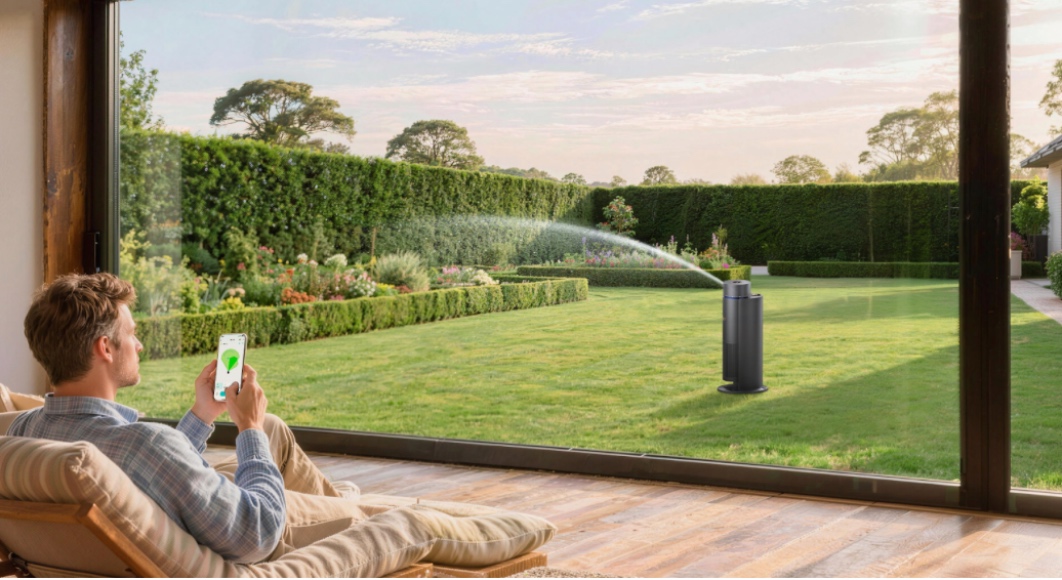
- Mobile or web applications that allow you to monitor and control irrigation remotely
These systems analyze environmental conditions and adjust watering schedules automatically. As a result, plants receive the right amount of water without constant manual oversight.
Benefits of Smart Irrigation Technology
Smart irrigation offers multiple advantages compared with traditional watering methods:
- Improved water efficiency through precise irrigation schedules
- Healthier plants due to consistent moisture levels
- Reduced maintenance time for gardeners and landscapers
- Lower water bills through minimized waste
For both home gardens and large landscapes, automation has become an important step toward sustainable gardening.
Comparing Irrigation Methods
The evolution of irrigation can be better understood by comparing the major methods used over time.
|
Irrigation Method |
Water Efficiency |
Labor Required |
Control Level |
|
Manual Watering |
Low |
High |
Limited |
|
Sprinkler Systems |
Moderate |
Medium |
Basic timers |
|
Drip Irrigation |
High |
Medium |
Adjustable flow |
|
Smart Irrigation System |
Very High |
Low |
Automated and sensor-based |
This comparison highlights how irrigation technology has steadily improved in efficiency and convenience.
Practical Tips for Transitioning to Smart Irrigation
If you are considering upgrading your garden watering system, a few practical steps can help ensure a smooth transition.
Evaluate Your Garden Layout
Start by assessing the size and layout of your garden. Consider:
- Plant types and water requirements
- Soil type and drainage characteristics
- Areas that receive direct sunlight versus shade
Understanding these factors will help determine the best irrigation setup.
Install Moisture Sensors
Soil moisture sensors are one of the most valuable features of smart irrigation. They prevent overwatering by measuring real soil conditions rather than relying on fixed schedules.
Use Weather-Based Scheduling
Modern systems can adjust watering based on rainfall, humidity, and temperature forecasts. This prevents unnecessary watering during rainy periods and improves water conservation.
Monitor Performance Regularly
Even automated systems benefit from occasional checks. Monitoring irrigation performance ensures that sensors, valves, and connections continue functioning properly.
The Environmental Impact of Modern Irrigation
One of the most important benefits of irrigation innovation is its positive environmental impact. Water conservation is becoming increasingly important as climate conditions change and urban populations grow.
Smart irrigation technologies support sustainability by:
- Reducing unnecessary water usage
- Preventing soil erosion caused by overwatering
- Supporting healthier plant growth with optimized hydration
- Lowering overall water consumption in residential landscapes
By delivering water only when needed, automated irrigation systems help create more environmentally responsible gardens.
The Future of Garden Irrigation
The next generation of irrigation technology is expected to become even more advanced. Emerging innovations include artificial intelligence, predictive weather modeling, and integrated smart home connectivity.
Future irrigation systems may feature:
- AI-driven watering predictions based on long-term climate data
- Fully integrated smart home control systems
- Advanced sensors that monitor plant health and soil nutrients
These technologies could transform gardening into a highly data-driven process, allowing you to manage landscapes with greater precision than ever before.
Conclusion
Garden irrigation has undergone a remarkable transformation over time. What once required daily manual labor using watering cans and hoses has gradually evolved into sophisticated systems that automate watering and optimize plant care. Each stage of this evolution has brought improvements in efficiency, convenience, and water management.
Today, the smart irrigation system represents one of the most advanced solutions available for modern gardening. By combining automation, sensors, and environmental awareness, these systems allow you to maintain healthy plants while conserving valuable water resources and simplifying everyday garden maintenance.