





Why Forklifts Are Now a Core Investment for Many Businesses
For a long time, forklifts were viewed as purely operational equipment: necessary, useful, but hardly strategic. They sat in the background of warehouses, yards, and production facilities, doing the unglamorous work of moving stock from one point to another. That perception has changed.
Today, forklifts are increasingly treated as a core business investment rather than a routine purchase. The reason is simple: movement inside a business is no longer a minor concern. It affects output, labour efficiency, safety, turnaround times, customer satisfaction, and ultimately profit. When goods do not move smoothly, everything else slows down with them.
In sectors where margins are tight and fulfilment expectations are high, internal handling equipment can have a bigger influence than many leaders realise. A business might invest heavily in inventory systems, automation software, or facility expansion, but if pallets are waiting too long to be unloaded, stored, retrieved, or dispatched, the gains from those investments are diluted. Forklifts sit right at that pressure point between planning and execution.
The Shift From Operational Tool to Strategic Asset
What has changed is the pace and complexity of modern operations. Warehouses are processing more SKUs, manufacturers are working with tighter production windows, and construction or trade suppliers are expected to move stock with far greater speed than before. A forklift is no longer just a machine that lifts and transports. In many businesses, it determines how efficiently space can be used, how quickly vehicles can be turned around, and how safely teams can work under pressure.
Efficiency Is No Longer Optional
Labour costs remain one of the biggest operational expenses for many businesses. At the same time, recruiting and retaining experienced warehouse staff has become more difficult. That combination has forced managers to think more carefully about how work gets done on the floor.
A well-matched forklift reduces wasted motion. It shortens travel time between storage and dispatch areas, improves loading efficiency, and enables fewer people to move more goods in less time. Over the course of a year, those small gains stack up into substantial savings. That is why equipment decisions are increasingly being made at leadership level, not simply delegated as routine maintenance replacements.
Better Handling Supports Better Service
Customers rarely think about forklifts, but they notice the outcomes. They notice whether deliveries arrive on time. They notice whether products are damaged. They notice whether orders are fulfilled accurately during peak periods. Reliable material handling plays a direct role in all of that.
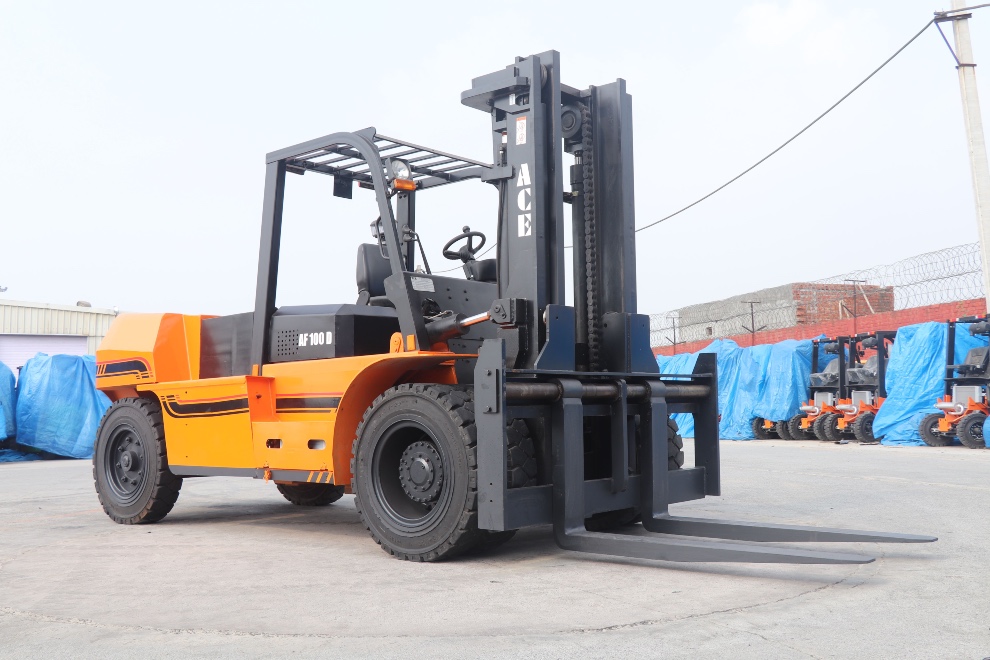
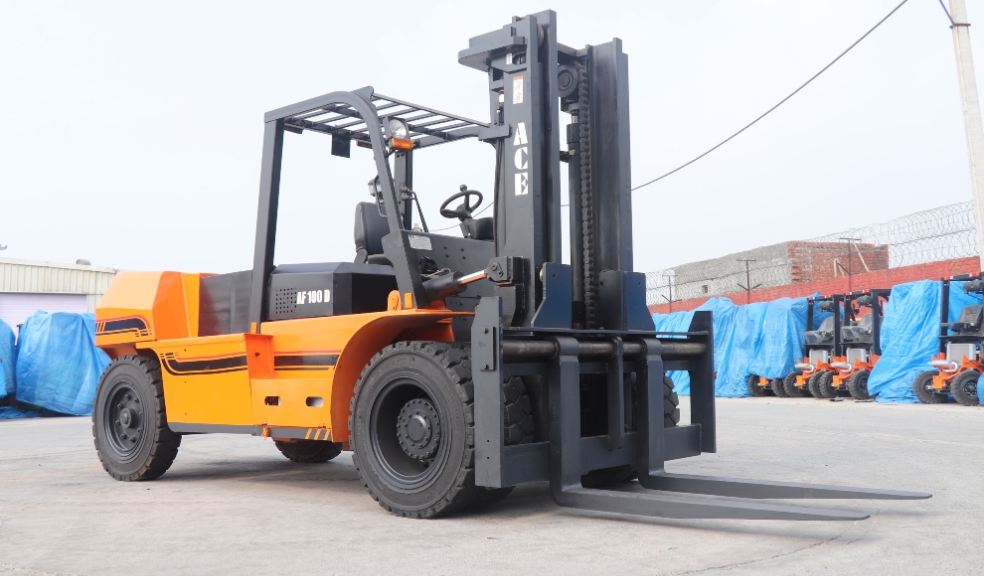
This is particularly true for businesses with bulky, palletised, or high-volume stock. In those environments, the case for investing in the right equipment becomes hard to ignore. Companies comparing options for heavy-duty forklifts for material handling tasks are often responding to a broader need: not simply replacing a truck, but strengthening the capacity of the whole operation.
Where the Business Case Is Strongest
Not every business needs the same type of forklift, but the strategic logic is spreading across sectors. The strongest case tends to appear where volume, weight, or speed create daily pressure.
- Warehousing and distribution centres handling large pallet movements
- Manufacturing sites moving raw materials and finished goods between stages
- Builders’ merchants and trade suppliers loading heavy stock quickly
- Recycling, waste, and industrial yards dealing with irregular or dense loads
In each case, the forklift is closely tied to throughput. If it underperforms, the operation feels it immediately.
Why Ownership Makes Increasing Sense
In the past, some businesses were content to treat forklifts as short-term practicalities. Now many are taking a longer view. Ownership or planned investment often makes more sense because it gives firms greater control over capacity, maintenance schedules, operator familiarity, and long-term cost planning.
Predictability Matters
When businesses rely on outside availability or delay equipment upgrades too long, they introduce uncertainty into core workflows. A forklift that is out of action too often, unsuitable for current load demands, or expensive to keep repairing can quietly become a drag on performance.
By contrast, a planned investment gives management a clearer picture of operating costs and reduces the disruption that comes with reactive decisions. It also allows time to choose equipment based on actual site conditions: aisle width, ground surface, load type, shift pattern, and storage layout.
Safety Has Become a Board-Level Concern
This shift is not only about productivity. It is also about risk. Manual handling injuries, damaged stock, and avoidable site incidents all carry financial and reputational consequences. An outdated or poorly suited forklift can contribute to each of those problems.
Modern investment decisions increasingly reflect this reality. Better visibility, more suitable lifting capacity, improved controls, and stronger operator ergonomics all matter. So does using equipment that matches the environment, whether that is a busy indoor warehouse or a rough outdoor yard. For many organisations, the forklift is now part of a wider health, safety, and compliance conversation, not just a purchasing line item.
Choosing for the Operation You’re Becoming
One common mistake is buying for the business as it exists today without considering where it will be in two or three years. Growth changes handling needs quickly. A company may expand product lines, increase stockholding, reconfigure its warehouse, or take on larger customer contracts. Equipment that feels adequate now can become restrictive surprisingly fast.
Capacity, Layout, and Downtime
The smartest investments begin with a few practical questions. What loads are actually being moved, and how often? Where are the pinch points in the working day? How much downtime is currently tolerated because “that’s just how the site operates”? Those answers usually reveal whether a forklift is supporting growth or quietly limiting it.
This is why forklift decisions deserve more attention than they sometimes get. They shape the speed, reliability, and resilience of the wider operation.
A Sign of Operational Maturity
Perhaps the clearest sign of this shift is cultural. Businesses that once treated material handling equipment as background infrastructure are now recognising it as a competitive advantage. That is a mark of operational maturity. It shows an understanding that profitability is not driven only by sales or strategy at the top, but by the consistency and efficiency of what happens every day on the ground.
Forklifts may still be practical machines, but their role has expanded. They influence how businesses use space, deploy labour, manage risk, and meet customer expectations. In an economy where speed and reliability carry real weight, that makes them much more than a maintenance necessity.
For many businesses, investing in forklifts is no longer about buying equipment. It is about protecting flow. And in modern operations, flow is everything.