




Office Design Trends for 2026: Why Lighting Matters for Productivity
Office design has moved far beyond rows of desks under harsh fluorescent fittings. As businesses look ahead of 2026, lighting has become a central part of how workspaces support productivity, wellbeing, and flexibility. The right lighting setup can actually influence how alert your teams feel, how long they can stay focused, and how comfortable they remain throughout the day.
When lighting works with natural rhythms and modern ways of working, it reduces fatigue, supports concentration, and makes offices feel like places people want to spend time in rather than spaces they simply tolerate.
Embrace Natural & Human-Centric Lighting
Human-centric lighting continues to influence and shape modern office environments. Circadian systems, lighting systems which mimic natural daylight, have become a lot more popular, aligning with the focus on wellbeing trend.
These kinds of setups automatically adjust things like brightness and colour temperature throughout the y to reflect natural daylight patterns. Ultimately, this helps staff feels energised in the morning and less strain later on in the day. Employers are now encouraged by the government to implement lighting that supports natural human rhythms, especially in offices with reduced daylight.
Layered Lighting for Focus & Flex Spaces
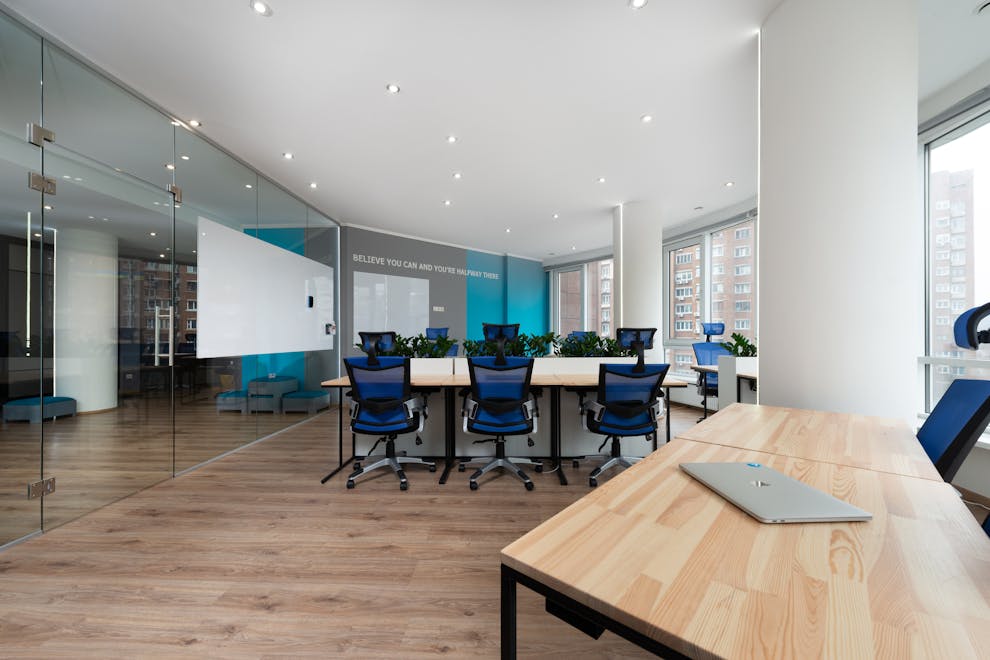
Modern offices rarely rely on a single lighting solution. Layerd lighting combines ambient light for general visibility, task lighting for desks, and accent lighting to define different work zones. This approach is suitable for many offices, including flexible workspaces where areas for focused, individual tasks, as well as collaboration are needed.
When people can work under lighting designed specifically for their activity, they experience less eye strain and maintain concentration for longer periods of time. Layered systems also gives you the flexibility to adapt different areas for required tasks, instead of overhauling the entire lighting design.
Smart & Sustainable IoT Driven Lighting
Smart lighting systems now play a crucial role in improving both efficiency and performance, Features such as occupancy sensors, daylight diming, and IoT controls can reduce energy wastage in meeting rooms and hybrid offices by automatically turning them off when not in use.
Many UK organisations report energy savings of up to 60% when they’ve implemented some form of smart lighting. Staff also benefit from stable, well-managed lighting that supports cognitive performance.
Accent & Atmosphere
Accent lighting can also be used to shape atmosphere and reinforce brand identity across office spaces. In breakout spaces, or reception zones, subtle lighting creates warmth and visual interest making the space feel inviting and welcoming. In creative areas or along shelving, LED strip lights add depth and definition while highlighting architectural details or brand colours, drawing in attention of guests.