





How to Choose the Right Safety Harness for Different Working at Height Applications Body
There is no single work at height harness that is suitable for every working at height application. A harness that performs well on a construction site may not provide the features needed for rope access, confined space entry or tower maintenance. Different working environments present different hazards, working positions and movement requirements, which is why harnesses are designed with specific configurations, attachment points and support features for particular tasks.
Choosing the right safety harness is about far more than meeting compliance requirements. A properly selected harness helps workers move more efficiently, remain comfortable during long periods of use and connect correctly with the rest of the fall protection system. Understanding how harness types differ and which features are appropriate for each application is an important step in reducing fall risks while improving safety and productivity on site. For organisations looking for reliable working at height equipment, SecureHeights supplies a wide range of safety harnesses and compatible fall protection solutions designed to support a variety of industrial applications and working environments.
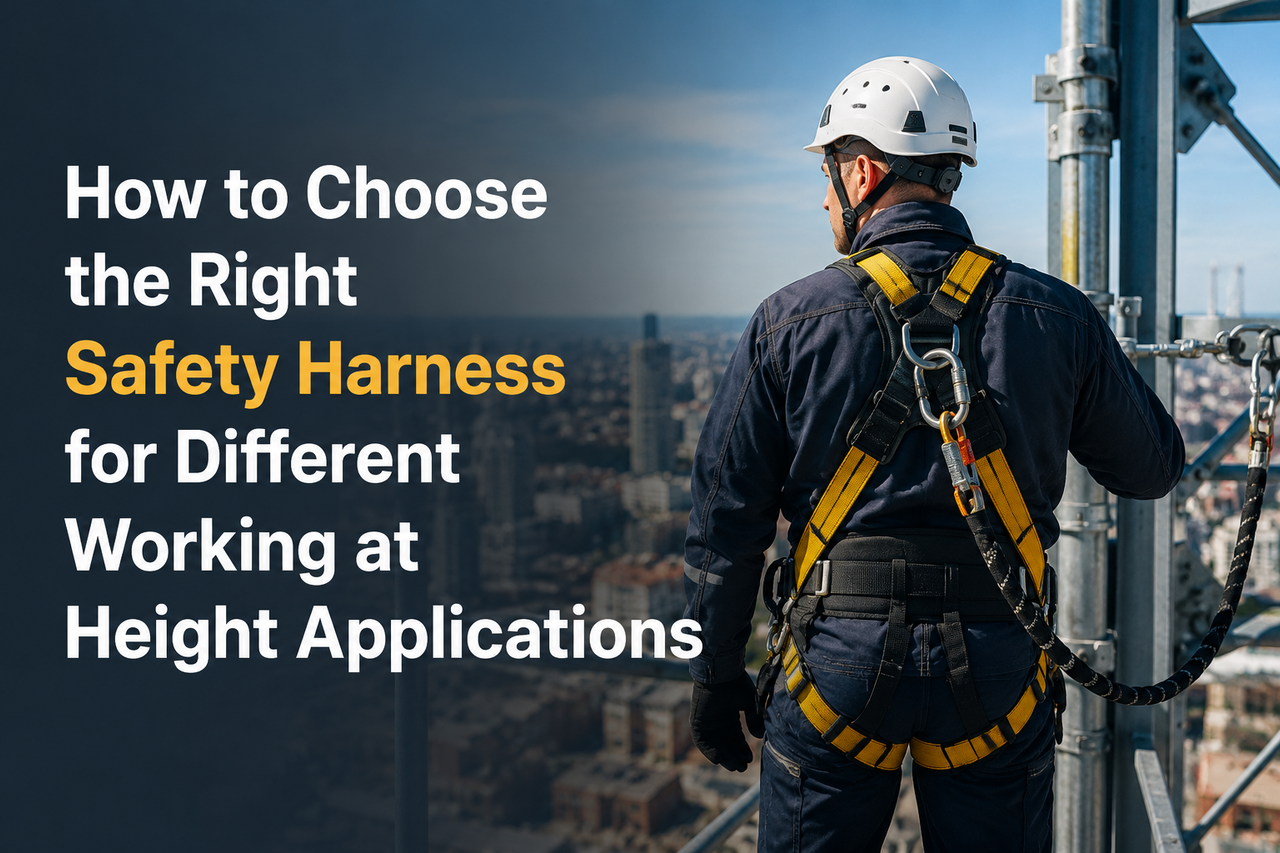
Understanding the Purpose of a Safety Harness
A safety harness is a key component of a complete fall protection system, but it cannot provide protection on its own. It is designed to work together with compatible equipment such as lanyards, self retracting lifelines, anchor devices and connectors. If any part of the system is unsuitable for the task or incorrectly used, the level of protection may be significantly reduced. For this reason, selecting the correct harness should always be considered alongside the other equipment required for the job.
Not every harness is intended for the same purpose. Some are designed to arrest a fall after it occurs, while others help prevent workers from reaching a fall hazard in the first place or provide stable support when working hands-free. Understanding these differences is essential when choosing equipment for a particular working environment.
The three most common applications are:
-
Fall arrest, where the harness is designed to safely stop a fall and distribute the arrest forces across the body.
-
Fall restraint, where the system prevents the worker from reaching an unprotected edge or other fall hazard.
-
Work positioning, where the harness supports the user in a stable working position while allowing both hands to remain free for the task.
Selecting a harness simply because it meets a particular standard or is commonly used on site is rarely the best approach. The nature of the work, the duration of the task, the required freedom of movement and the method of connection to the fall protection system should all influence the choice. A harness that is well suited to roofing work may not be appropriate for confined space rescue, while equipment designed for rope access often includes features that are unnecessary for general construction activities. Matching the harness to the specific application helps improve comfort, efficiency and, most importantly, worker safety.
Types of Safety Harnesses and When to Use Them
Safety harnesses are available in several configurations, each designed to support different working methods and levels of risk. While many people associate harnesses only with fall arrest, modern fall protection equipment includes specialised designs for positioning, rescue operations, rope access and other demanding applications. Selecting the correct harness begins with understanding the purpose of each type rather than assuming one design is suitable for every task.
The table below provides an overview of the main categories of safety harnesses and their typical applications.
|
Harness Type |
Typical Applications |
Main Features |
|
Full body harness |
General working at height, construction, roofing, maintenance |
Designed for fall arrest, distributes arrest forces across the body, available with various attachment points |
|
Chest harness |
Rope access, climbing systems, specialised work |
Provides upper body support and is often used together with a compatible sit or full body harness rather than as a standalone solution |
|
Seat harness |
Rope access, inspection work, industrial climbing, prolonged suspension |
Offers greater comfort during extended periods of suspension and allows improved mobility while working |
|
Full body harness with work positioning attachment points |
Utility work, telecom towers, steel structures, maintenance |
Includes side D-rings that help support the user in a stable working position while keeping both hands free |
|
Rescue harness |
Confined space entry, emergency response, rescue operations |
Designed to facilitate casualty recovery and lifting, often includes additional attachment points for rescue procedures |
Although these categories appear distinct, some modern harnesses combine multiple functions within a single design. For example, a full body harness may also include work positioning side D-rings or integrated rescue attachment points, allowing it to perform several roles when required. This can reduce the amount of equipment workers need while ensuring compatibility across different tasks.
The most appropriate choice depends on the work being carried out, the expected movement of the user and the overall fall protection system. Considering these factors before selecting a harness helps ensure that the equipment provides the required level of safety, comfort and functionality throughout the job.
Choosing the Right Harness for Different Working Environments
The environment in which work is carried out has a significant influence on the type of safety harness that should be used. Factors such as the likelihood of a fall, the need for continuous climbing, prolonged suspension or emergency rescue all affect the most suitable harness configuration. Selecting equipment according to the working environment helps improve both safety and efficiency while ensuring compatibility with the rest of the fall protection system.
Construction Sites
Construction sites present a wide variety of fall hazards, including unprotected edges, incomplete structures, scaffolding, steel frameworks and temporary access equipment. Workers often move between different work areas during the day, making versatility an important consideration.
For many construction activities, a full body harness provides the most appropriate solution. Models with front and rear attachment points offer greater flexibility, while additional positioning attachments may be beneficial for workers who regularly carry out structural steel or maintenance tasks.
Roofing Work
Roofing remains one of the highest-risk working at height activities due to fragile surfaces, roof edges, skylights and changing weather conditions. Depending on the work area, the objective may be to prevent access to the fall hazard or to arrest a fall should one occur.
Roofing applications commonly use full body harnesses connected to either fall restraint or fall arrest systems, depending on the site-specific risk assessment. Lightweight harnesses with adjustable leg and shoulder straps are often preferred because they provide comfort while allowing unrestricted movement during installation, inspection and repair work.
MEWP and Mobile Elevated Platforms
When working from Mobile Elevating Work Platforms, the primary objective is often to prevent the operator from being ejected from the platform rather than to arrest a free fall. As a result, restraint systems are commonly preferred where recommended by equipment manufacturers and site procedures.
Harnesses used with MEWPs typically include a rear attachment point that connects to the designated anchorage within the platform using a suitable restraint lanyard. The exact attachment method should always follow the manufacturer's instructions and the specific requirements of the equipment being used.
Tower and Telecom Maintenance
Workers maintaining communication towers, masts and similar structures frequently spend long periods climbing while carrying equipment. Their harness must support continuous movement while also allowing secure positioning during maintenance activities.
These applications often benefit from full body harnesses with integrated work positioning attachment points. Side attachment points allow technicians to remain securely supported while working hands-free, reducing fatigue and improving stability during inspections, repairs and equipment installation.
Confined Space Entry and Rescue
Confined spaces introduce additional hazards beyond fall protection, including restricted access, limited escape routes and the potential need for rapid casualty retrieval. In these environments, the harness must support both normal working activities and emergency rescue procedures.
Rescue harnesses or full body harnesses designed for confined space entry commonly include dedicated lifting or retrieval attachment points that enable the worker to be safely recovered using a tripod, davit system or mechanical winch. Selecting equipment that supports efficient rescue planning is an essential part of confined space safety.
Rope Access Operations
Rope access work differs significantly from conventional working at height because users may remain suspended for extended periods while performing inspections, maintenance or installation work. Comfort, mobility and body support become just as important as fall protection.
These applications typically require specialist harnesses that combine a full body harness with a seat harness to improve suspension comfort and distribute the user's weight more effectively. Additional attachment points for ascenders, descenders and other rope access equipment allow the harness to integrate with the complete rope access system while supporting safe movement throughout the work area.
How to Select the Right Harness Features
Beyond choosing the correct type of harness, it is equally important to evaluate the individual features that determine how the equipment performs in daily use. Different jobs place different demands on the wearer, so the ideal harness for a technician climbing telecommunications towers may differ considerably from one used for roofing or confined space rescue. Selecting the appropriate features improves comfort, reduces fatigue and helps ensure the harness functions correctly as part of the complete fall protection system.
When comparing safety harnesses, pay particular attention to the following features:
-
Attachment points. Rear D-rings are commonly used for fall arrest, while front or sternal attachment points may be required for ladder climbing, rope access or rescue applications. Side D-rings are typically included on work positioning harnesses to support hands-free working.
-
Comfort and padding. Workers who wear a harness throughout the day benefit from padded shoulder straps, leg loops and waist sections that help reduce pressure and improve overall comfort.
-
Adjustability. Multiple adjustment points allow the harness to fit different body shapes correctly while helping to keep the attachment points in the intended position during use.
-
Buckle systems. Quick-connect buckles make donning and removing the harness faster, while traditional pass-through buckles may be preferred in some working environments because of their simplicity and durability.
-
Suspension relief accessories. Suspension relief straps or similar accessories can help reduce discomfort if a worker remains suspended following a fall while awaiting rescue. These accessories should complement, rather than replace, an effective rescue plan.
-
Freedom of movement and weight distribution. A well-designed harness allows workers to climb, bend and reach naturally without unnecessary restriction. Balanced weight distribution also helps reduce fatigue during prolonged use, particularly for tasks involving frequent movement or extended periods at height.
No single combination of features is suitable for every application. The best harness is one that matches the specific work activity, integrates with compatible fall protection equipment and provides the level of comfort needed for workers to wear it correctly throughout the task.
Harness Compatibility with Other Fall Protection Equipment
A safety harness is only one part of a complete fall protection system and should never be considered in isolation. Its effectiveness depends on how well it integrates with the other components used on site. Even a high-quality harness cannot provide the intended level of protection if it is connected to incompatible equipment or used in a system that has not been designed for the specific working environment.
One of the most common connections is between the harness and a lanyard. Depending on the application, this may be a fixed restraint lanyard that prevents access to a fall hazard or a shock absorbing lanyard designed to reduce the forces generated during a fall. The selected connection should always match the intended purpose of the system.
Many working at height applications also rely on self retracting lifelines. These devices automatically adjust the length of the connecting line as the user moves, helping maintain freedom of movement while limiting fall distance. The harness and self retracting lifeline must be compatible in terms of attachment point, rated capacity and intended use.
The complete system also includes a suitable anchor device capable of supporting the expected loads. Whether the harness is connected to a permanent anchor, temporary anchor or engineered anchorage system, compatibility between all components is essential. Using connectors that are not designed to work together may increase the risk of accidental disengagement or improper loading.
Vertical and horizontal lifeline systems provide continuous protection while workers move across ladders, roofs, structures or other elevated work areas. Harnesses used with these systems should have the appropriate attachment points specified by the system manufacturer to ensure safe movement without compromising protection.
Some working environments require additional equipment beyond standard fall protection. Confined space operations may involve retrieval devices, tripods or davit systems that connect directly to designated rescue attachment points on the harness. Similarly, work positioning systems rely on compatible side attachment points that allow workers to remain securely supported while carrying out tasks with both hands free.
Selecting compatible equipment is just as important as selecting the correct harness itself. Every component should function as part of an integrated system that has been assessed for the specific work activity, ensuring that safety, mobility and rescue requirements are all considered together.
Harness Kits vs Individual Equipment
When selecting fall protection equipment, one of the first decisions is whether to purchase a complete harness kit or assemble a system from individual components. Both approaches have advantages, but the most appropriate option depends on the complexity of the work, the working environment and whether a standard or customised solution is required.
A typical harness kit is designed to provide the essential components needed for common working at height applications. Although the exact contents vary, most kits include:
-
A full body safety harness.
-
A compatible lanyard or self retracting lifeline.
-
Connectors such as carabiners or scaffold hooks.
-
A storage bag or carrying case.
-
User instructions and product documentation.
Complete harness kits are often a practical choice for general construction, roofing, maintenance and other routine working at height tasks where the equipment requirements are straightforward. Because the components have been selected to work together, kits can simplify purchasing while reducing the risk of compatibility issues.
Individual components are often the better option when the work involves specialised activities or unique site conditions. Rope access technicians, confined space teams and workers using engineered fall protection systems may require harnesses with specific attachment points, dedicated rescue features or compatibility with existing equipment already in service. Purchasing components separately also allows organisations to replace individual items as they reach the end of their service life rather than replacing an entire kit.
Whichever approach is chosen, every component should be compatible with the complete fall protection system and suitable for the intended application. Selecting equipment based on the specific hazards and operational requirements of the job will always provide a better outcome than relying on a one-size-fits-all solution.
Common Mistakes When Choosing a Safety Harness
Selecting the correct safety harness involves more than choosing a product that meets the required standards. Many workplace incidents can be traced to equipment that was suitable in general but inappropriate for the specific task or working environment. Understanding the most common selection mistakes can help organisations build safer and more effective fall protection systems.
One of the most frequent mistakes is focusing primarily on purchase price. While cost is an important consideration, selecting the lowest-priced harness without evaluating its intended application, features or compatibility may result in equipment that does not adequately support the work being carried out. A harness should always be selected based on operational requirements rather than cost alone.
Another common issue is using the wrong attachment point. Different attachment points are designed for different purposes, and connecting to an incorrect D-ring may reduce the effectiveness of the system or prevent it from functioning as intended. Workers should always use the attachment point specified for the particular fall protection or work positioning system.
Comfort is also frequently overlooked, particularly for workers who spend many hours wearing a harness. Poorly fitting or uncomfortable equipment may restrict movement, increase fatigue or encourage incorrect use. Features such as padding, adjustability and balanced weight distribution can make a significant difference during extended periods of work.
Compatibility between components is equally important. Harnesses, lanyards, connectors, anchor devices and lifelines should all be designed to function together as part of a complete system. Mixing incompatible equipment from different systems without confirming compatibility can introduce unnecessary risks.
Selecting the wrong harness size is another avoidable mistake. A harness that is too loose may not keep the attachment points in the correct position, while one that is too tight can reduce comfort and restrict movement. Proper adjustment is essential to ensure the harness performs as intended.
Finally, rescue requirements are sometimes considered only after the fall protection system has been selected. Every working at height activity should include a suitable rescue plan, and the harness should support that plan where necessary. For confined space entry, rope access and other specialist applications, this may require rescue-specific attachment points or equipment designed to facilitate safe retrieval following an incident.
Inspection, Maintenance and Replacement
Even the highest quality safety harness will only provide reliable protection if it remains in good condition throughout its service life. Regular inspections, correct storage and timely replacement are essential parts of any fall protection programme. A damaged or poorly maintained harness may not perform as intended during a fall, making routine inspection just as important as selecting the correct equipment.
Before every use, the wearer should carry out a visual and physical inspection of the harness. In addition to these routine checks, harnesses should undergo periodic inspections by a competent person at the intervals specified by the manufacturer or required by workplace procedures. Inspection records should be maintained to help track the condition and service history of each item.
During inspections, particular attention should be given to:
-
Webbing for cuts, fraying, abrasion, burns or chemical damage.
-
Stitching for loose, broken or damaged threads.
-
D-rings, buckles and metal fittings for corrosion, cracks, deformation or excessive wear.
-
Labels and product markings to ensure they remain present and legible.
-
Signs that the harness has been subjected to a fall or other abnormal loading.
Correct storage also plays an important role in extending the service life of a harness. Equipment should be kept clean and dry, stored away from direct sunlight, excessive heat, chemicals and sharp objects, and protected from unnecessary mechanical damage during transport or storage.
A safety harness should be removed from service immediately if it has arrested a fall, shows signs of significant damage, fails an inspection or reaches the manufacturer's stated retirement criteria. Continuing to use equipment with uncertain integrity introduces unnecessary risk and may compromise the effectiveness of the entire fall protection system.
Final Thoughts
Choosing the right safety harness begins with understanding the work being performed rather than selecting the first available product. Factors such as the working environment, fall hazards, required attachment points, compatibility with other equipment and planned rescue procedures should all be considered before a harness is put into service. A well-chosen harness not only helps reduce the consequences of a fall but also improves comfort, mobility and confidence during everyday work at height.
No single harness is suitable for every application, which is why it is important to view the harness as one part of a complete fall protection system. The most effective solution combines compatible equipment, correct user training, regular inspections and a rescue plan that reflects the specific risks of the task. Whether the work involves construction, roofing, confined spaces, rope access or industrial maintenance, selecting equipment designed for that environment is essential for maintaining a high standard of safety.
For organisations looking to build or upgrade their fall protection systems, SecureHeights offers a comprehensive range of safety harnesses, harness kits and working at height equipment from leading manufacturers including 3M DBI SALA, Petzl, Skylotec, CAMP Safety, Climbing Technology and many others. Alongside harnesses, the range includes self retracting lifelines, anchor devices, rescue equipment, confined space systems and engineered fall protection solutions, making it easier to select compatible equipment for a wide variety of working at height applications.